
I’ve been a fan of 50 Cent since the first time I heard “In Da Club” as a teenager. The songs an absolute banger, and seeing the music video where 50’s being operated on by Dr.Dre and Eminem (my favorite rapper) made me an instant fan. Of course, 50’s debut album “Get Rich Or Die Tryin'” was a classic too, and sold 12 Million copies in 2003, making it the best selling record of the year. He followed that up with another great project, “The Massacre,” and then starred as himself in a movie about his life. He also had his own rap group called G-Unit, a sneaker line through Reebok, and a video game series where you went around killing gangsters in the New York underworld.
For a few years in the 2000s, there was no doubt the #1 rapper in the world was 50 Cent.
50 has an incredible life story and had to overcome a lot of adversity in his rise to success, but the one thing most people know about him is that at one point, he was shot 9 times and barely survived. It’s absurd to think that someone actually put that many bullets into him, and somehow, not even 1 of them killed him. And then miraculously, after that, he recovered, continued pursuing his dreams, and ended up becoming a global superstar.
A story that seems so unbelievable but did, in fact, happen.
Many years later, when I was a young adult, I found out that 50 had collaborated with the author of “The 48 Laws Of Power,” Robert Greene, on a book called “The 50th Law.” The book focuses on 50 Cent’s life story and the fear that paralyzes us from pursuing our dreams. I was going through a dark period in my life where I was dealing with a lot of fear myself, so it reached me at the perfect time. The content resonated with me and gave me a new mindset to tackle my challenges. It quickly became my favorite book and something I constantly referred to as I progressed through life.
My favorite chapter in the book gives an inside look at the time 50 Cent almost got assassinated, and his dreams were temporarily shattered. I never knew the whole story surrounding 50 getting shot, and this chapter gives you all the gritty details on how it affected him and the adversity he had to overcome following the shooting. Then, Robert talks about how we can avoid succumbing to a victim mentality and look at the drama we face as a blessing instead of a curse.
We all face hardships, and I think this chapter will motivate anyone struggling to stand up and keep fighting. If you find the information useful, check out the full book. It’s full of gems that will help you get through the tough battles we all face in life 💎.
Excerpt from “The 50th” Law by 50 Cent & Robert Greene
Chapter 3 – Turn Shit into Sugar – Opportunism
Every negative situation contains the possibility for something positive, an opportunity. It is how you look at it that matters. Your lack of resources can be an advantage, forcing you to be more inventive with the little that you have. Losing a battle can allow you frame yourself as the sympathetic underdog. Do not let fears make you wait for a better moment or become conservative. If there are circumstances you cannot control, make the best of them. It is the ultimate alchemy to transform all such negatives into advantages and power.
Hood Alchemy
“If one is continually surviving the worst that life can bring, one eventually ceases to be controlled by a fear of what life can bring.”
James Baldwin
For well over a year 50 Cent had been working on what was meant to be his debut album, Power of the Dollar, and finally in the spring of 2000 it was ready to be released by Columbia Records. It represented to him all the struggles he had been through on the streets, and he had hopes that it would turn his life around for good. In May of that year, however, a few weeks before the launch date, a hired assassin shot nine bullets into him while he sat in the back of a car, one bullet going through his jaw and nearly killing him.
In a flash, all of the momentum he had built up reversed itself. Columbia canceled the release of the record and dropped Fifty from his contract. There was too much violence associated with him; it was bad for business. A few inquiries made it clear that other labels felt the same—he was being blackballed from the industry. One executive told him flatly he would have to wait at least two years before he could think of resurrecting his career.
The assassination attempt was the result of an old drug beef from his days as a dealer; the killers could not afford to let him survive and would try to finish the job. Fifty had to keep a low profile. At the same time, he had no money and could not return to street hustling. Even many of his friends, who had hoped to be part of his success as a rapper, started to avoid him.
In just a few short weeks he had gone from being poised for fame and fortune to hitting the bottom. And there seemed no way to move out of the corner he found himself in. Could this be the end of all his efforts? It would have been better to die that day than to feel this powerlessness. But as he lay in bed at his grandparents’ house, recovering from the wounds, he listened a lot to the radio, and what he heard gave him an incredible rush of optimism: an idea started taking shape in his mind that the shooting was in fact a great blessing in disguise, that he had narrowly survived for a reason.
The music on the radio was all so packaged and produced. Even the tough stuff, the gangsta rap, was fake. The lyrics did not reflect anything from the streets that he knew. The attempt to pass it off as real and urban angered him to a point he could not endure. This was not the time for him to be afraid and depressed, or to sit around and wait a few years while all of the violence around him died down. He had never been a fake studio gangsta and now he had the nine bullet wounds to prove it. This was the moment to convert all of his anger and dark emotions into a powerful campaign that would shake the very foundations of hip-hop.
As a hustler on the streets Fifty had learned a fundamental lesson: Access to money and resources is severely limited in the hood. A hustler must transform every little event and every trifling object into some gimmick for making money. Even the worst shit that happens to you can be converted into gold if you are clever enough. All of the negative factors now facing him—little money, no connections, the price on his head—could be turned into their opposites, advantages and opportunities. That is how he would confront the seemingly insurmountable obstacles now in his path.
He decided to disappear for a few months and, holed up in various friends’ houses, he began to re-create himself and his music career. With no executives to have to please or worry about, he could push his lyrics and the hard sounds as far as he wanted. His voice had changed as a result of the pieces of bullet still lodged in his tongue—it now had a hiss. It was still painful for him to move his mouth, so he had to rap more slowly. Instead of trying to normalize and retrain his voice, he determined to turn it into a virtue. His new style of rapping would be more deliberate and menacing; that hiss would remind listeners of the bullet that had gone through his jaw. He would play all of that up.
In the summer of 2001, just as people had begun to forget about him, Fifty suddenly released his first song to the streets. It was called “Fuck You,” the title and the lyrics summarizing how he felt about his killers—and everyone who wanted him to go away. Just putting out the song was message enough—he was defying his assassins openly and publicly. Fifty was back, and to shut him up they would have to finish the job. The palpable anger in his voice and the hard-driving sound of the song made it a sensation on the streets. It also came with an added punch—because he seemed to be inviting more violence, the public had to grab up everything he produced before he was killed. The life-and-death angle made for a compelling spectacle.
Now the songs started to pour out of him. He fed off all the anger he felt and the doubts people had had about him. He was also consumed with a sense of urgency—this was his last chance to make it and so he worked night and day. Fifty’s mix-tapes began to hit the street at a furious pace.
Soon he realized the greatest advantage he possessed in this campaign—the feeling that he had already hit bottom and had nothing to lose. He could attack the record industry and poke fun at its timidity. He could pirate the most popular songs on the radio and put his own lyrics over them to create wicked parodies. He didn’t care about the consequences. And the further he took this the more his audiences responded. They loved the transgressive edge to it. It was like a crusade against all the fake crap on the radio, and to listen to Fifty was to participate in the cause.
On and on he went, transforming every conceivable negative into a positive. To compensate for the lack of money to distribute his mix-tapes far and wide, he decided to encourage bootleggers to pirate his tracks and spread his music around like a virus. With the price still on his head, he could not give concerts or do any kind of public promotion; but somehow he turned even this into a marketing device. Hearing his music everywhere but not being able to see him only added to the mystique and the attention people paid to him. Rumors and word of mouth helped form a kind of Fifty mythology. He made himself even scarcer to feed this process.
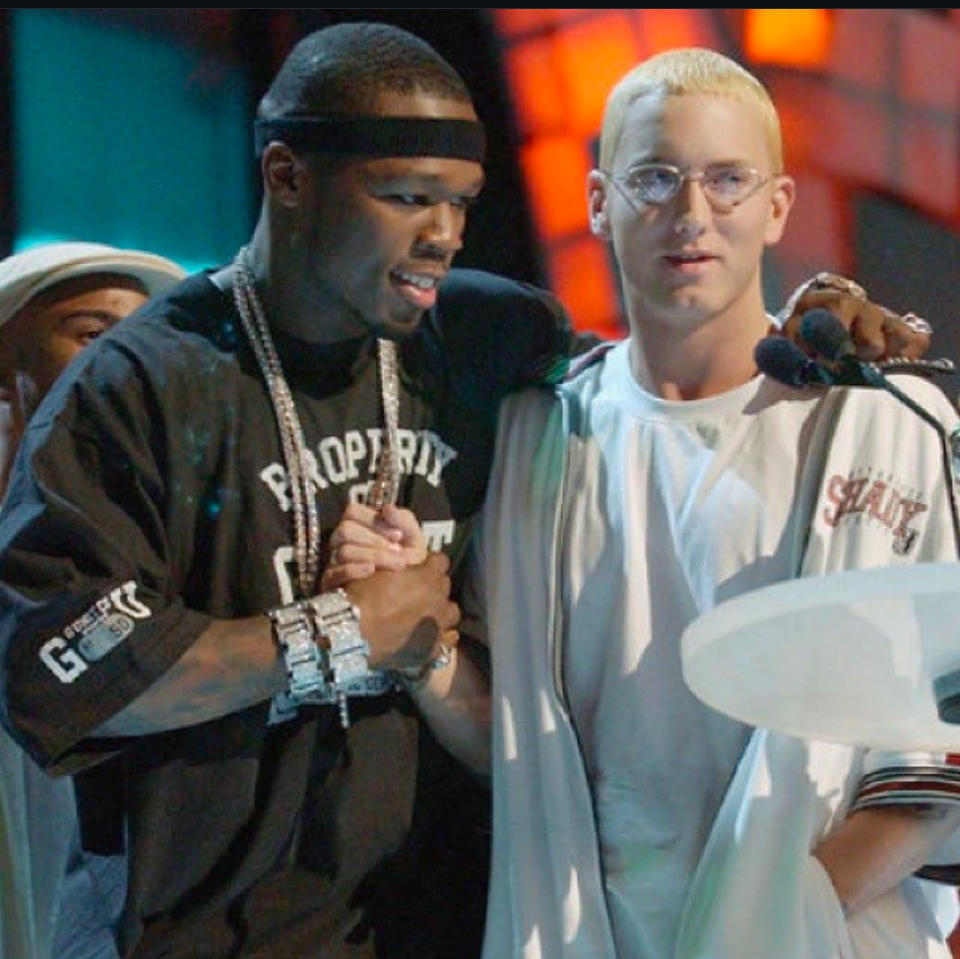
The momentum now was devastating—you could not go far in New York without hearing his music blasted from some corner. Soon one of his mix-tapes reached the ears of Eminem, who decided this was the future of hip-hop and quickly signed Fifty in early 2003 to his and Dr. Dre’s label, Shady Aftermath, completing one of the most rapid and remarkable turnarounds in fortune in modern times.
The Fearless Approach
“Every negative is a positive. The bad things that happen to me, I somehow make them good. That means you can’t do anything to hurt me.”
50 Cent
Events in life are not negative or positive. They are completely neutral. The universe does not care about your fate; it is indifferent to the violence that may hit you or to death itself. Things merely happen to you. It is your mind that chooses to interpret them as negative or positive. And because you have layers of fear that dwell deep within you, your natural tendency is to interpret temporary obstacles in your path as something larger—setbacks and crises.
In such a frame of mind, you exaggerate the dangers. If someone attacks and harms you in some way, you focus on the money or position you have lost in the battle, the negative publicity, or the harsh emotions that have been churned up. This causes you to grow cautious, to retreat, hoping to spare yourself more of these negative things. It is a time, you tell yourself, to lay low and wait for things to get better; you need calmness and security.
What you do not realize is that you are inadvertently making the situation worse. Your rival only gets stronger as you sit back; the negative publicity becomes firmly associated with you. Being conservative turns into a habit that carries over into less difficult moments. It becomes harder and harder to move to the offensive. In essence you have chosen to cast life’s inevitable twists of fortune as hardships, giving them a weight and endurance they do not deserve.
What you need to do, as Fifty discovered, is take the opposite approach. Instead of becoming discouraged and depressed by any kind of downturn, you must see this as a wake-up call, a challenge that you will transform into an opportunity for power. Your energy levels rise. You move to the attack, surprising your enemies with boldness. You care less what people think about you and this paradoxically causes them to admire you—the negative publicity is turned around. You do not wait for things to get better—you seize this chance to prove yourself. Mentally framing a negative event as a blessing in disguise makes it easier for you to move forward. It is a kind of mental alchemy, transforming shit into sugar.
Understand: we live in a society of relative prosperity, but in many ways this turns out to be a detriment to our spirit. We come to feel that we naturally deserve good things, that we have certain privileges due to us. When setbacks occur, it is almost a personal affront or punishment. “How could this have happened?” we ask. We either blame other people or we blame ourselves. In both cases, we lose valuable time and become unnecessarily emotional.
In places like the hood or in any kind of materially impoverished environment, the response to hardship is much different. There, bad things happening assume a kind of normality. They are part of daily life. The hustler thinks: “I must make the most of what I have, even the bad stuff, because things are not going to get better on their own. It is foolish to wait; tomorrow may bring even worse shit.” If Fifty had waited, as he had been counseled, he would be just another rapper who had had a moment of success and then faded quickly away. The hood would have consumed him.
This hustler mind-set is more realistic and effective. The truth is that life is by nature harsh and competitive. No matter how much money or resources you have accumulated, someone will try to take them from you, or unexpected changes in the world will push you backward. These are not adverse circumstances but merely life as it is. You have no time to lose to fear and depression, and you do not have the luxury of waiting.
All of the most powerful people in history demonstrate in one way or another this fearless attitude towards adversity. Look at George Washington. He was a wealthy landowner but his attitude towards life had been forged by years fighting for the British in the French and Indian War, amid the harsh environment of frontier America. In 1776, Washington was made supreme commander of the American Revolutionary army. At first glance this position seemed more like a curse. The army was a semi-organized mob. It had no training, was poorly paid and outfitted, and its morale was low—most of the soldiers did not really believe they could succeed in defeating the all-powerful British.
Throughout 1777, British forces pushed this weak American army around, from Boston to New York, until by the end of the year Washington had been forced to retreat to New Jersey. This was the darkest moment in his career and in the war for independence. Washington’s army had dwindled to a few thousand men; they had little food and were poorly clothed, during one of the bitterest winters in memory. The American Continental Congress, fearing imminent disaster, fled from Philadelphia to Baltimore.
Assessing this situation, a cautious leader would have chosen to wait out the winter, muster more troops, and hope for some change in fortune. But Washington had a different mind-set. As he perceived it, his army would be considered by the British as too weak to pose any threat. Being small, his army could move without the enemy’s knowledge, and launch an attack that was all the more surprising for coming out of nowhere. Moving to the attack would excite the troops and gain some much-needed positive publicity. Thinking in this manner, he decided to lead a raid on an enemy garrison in Trenton, which proved to be a great success. He followed this up with an attack on British supplies at Princeton. These daring victories captivated the American public. Confidence had been restored in Washington as a leader and the American army as a legitimate force.
From then on, Washington waged a guerrilla-style war, wearing out the British with the great distances they had to cover. Everything was turned around—lack of funds and experience led to a more creative way of fighting. The smallness of his forces allowed him to torment the enemy with fluid maneuvering over rough terrain. At no point did he decide to wait for more troops or more money or better circumstances—he went continually on the attack with what he had. It was a campaign of supreme fearlessness, in which all negatives were converted into advantages.
This is a common occurrence in history: almost all great military and political triumphs are preceded by some kind of crisis. That is because a substantial victory can only come out of a moment of danger and attack. Without these moments, leaders are never challenged, never get to prove themselves. If the path is too smooth, they grow arrogant and make a fatal mistake. The fearless types require some kind of adversity against which they can measure themselves. The tenseness of such dark moments brings out their creativity and urgency, making them rise to the occasion and turn the tide of fortune from defeat to a great victory.
You must adopt an attitude that is the opposite to how most people think and operate. When things are going well, that is precisely when you must be concerned and vigilant. You know it will not last and you will not be caught unprepared. When things are going badly, that is when you are most encouraged and fearless. Finally you have material for a powerful reversal, a chance to prove yourself. It is only out of danger and difficulty that you can rise at all. By simply embracing the moment as something positive and necessary you have already converted it into gold.
Keys To Fearlessness
“In nooks all over the earth sit men who are waiting, scarcely knowing in what way they are waiting in vain. Occasionally the call that awakens – That accident which gives the “Permission to act – Comes too late, when the best youth and strength for action has already been used up by sitting still; And many have found to their horror when they “leaped up” that their limbs had gone to sleep and their spirit had become too heavy. “It is too late,” they said to themselves, having lost their faith in themselves and henceforth forever useless.”
Friedrich Nietzsche
Our minds possess powers we have not even begun to tap into. These powers come from a mix of heightened concentration, energy, and ingenuity in the face of obstacles. Each of us has the capacity to develop these powers, but first we have to be aware of their existence. This is difficult, however, in a culture that emphasizes material means—technology, money, connections—as the answer to everything. We place unnecessary limits on what the mind can accomplish, and that becomes our reality. Look at our concept of opportunity and you will see this in its clearest light.
According to conventional wisdom, an opportunity is something that exists out there in the world; if it comes our way and we seize it, it brings us money and power. This could be a particular job, the perfect fit for us; it could be a chance to create or join a new venture. It could be meeting the appropriate person. In any event, it depends on being at the right place at the right time and having the proper skills to take advantage of this propitious moment. We generally believe there are only a few such golden chances in life, and most of us are waiting for them to cross our path.
This concept is extremely limited in scope. It makes us dependent on outside forces. It stems from a fearful, passive attitude towards life that is counterproductive. It constrains our minds to a small circle of possibility. The truth is that for the human mind, everything that crosses its path can be a potential tool for power and expansion.
Many of us have had the following experience: we find ourselves in an urgent, difficult situation. Perhaps we have to get something done in an impossibly short amount of time, or someone we had counted on for help does not come through, or we are in a foreign land and must suddenly fend for ourselves. In these situations, necessity crowds in on us. We have to get work done and figure out problems quickly or we suffer immediate consequences. What usually happens is that our minds snap to attention. We find the necessary energy because we have to. We pay attention to details that normally elude us, because they might spell the difference between success and failure, life and death. We are surprised at how inventive we become. It is at such moments that we get a glimpse of that potential mental power within us that generally lies untapped. If only we could have such a spirit and attitude in everyday life.
This concept is extremely limited in scope. It makes us dependent on outside forces. It stems from a fearful, passive attitude towards life that is counterproductive. It constrains our minds to a small circle of possibility. The truth is that for the human mind, everything that crosses its path can be a potential tool for power and expansion.
Many of us have had the following experience: we find ourselves in an urgent, difficult situation. Perhaps we have to get something done in an impossibly short amount of time, or someone we had counted on for help does not come through, or we are in a foreign land and must suddenly fend for ourselves. In these situations, necessity crowds in on us. We have to get work done and figure out problems quickly or we suffer immediate consequences. What usually happens is that our minds snap to attention. We find the necessary energy because we have to. We pay attention to details that normally elude us, because they might spell the difference between success and failure, life and death. We are surprised at how inventive we become. It is at such moments that we get a glimpse of that potential mental power within us that generally lies untapped. If only we could have such a spirit and attitude in everyday life.
This attitude is what we shall call “opportunism.” True opportunists do not require urgent, stressful circumstances to become alert and inventive. They operate this way on a daily basis. They channel their aggressive energy into hunting down possibilities for expansion in the most banal and insignificant events. Everything is an instrument in their hands, and with this enlarged notion of opportunity, they create more of it in their lives and gain great power.
Perhaps the greatest opportunist in history is Napoleon Bonaparte. Nothing escaped his attention. He focused with supreme intensity on all the details, finding ways to transform even the most trivial aspects of warfare – how to march and carry supplies, how to organize troops into divisions – into tools of power. He ruthlessly exploited the slightest mistake of his opponents. He was the master at turning the worst moments in battle into material for a devastating counterattack.
All of this came out of Napoleon’s determination to see everything around him as an opportunity. By looking for these opportunities, he found them. This became a mental skill that he refined to an art. This power is open to each and everyone one of us if we put into practice the following four principles of the art.
Make The Most Of What You Have
In 1704, a Scottish sailor named Alexander Selkirk found himself marooned on a deserted island some four hundred miles off the coast of Chile. All he had with him was a rife, some gunpowder, a knife, and some carpenter’s tools. In exploring the interior, he saw nothing but a bunch of goats, cats, rats, and some unfamiliar animals that made strange noises at night. It was a shelterless environment. He decided to keep to the shoreline, slept in a cave, found enough to eat by catching fish, and slowly gave way to a deep depression .He knew he would run out of gunpowder, his knife would get rusty, and his clothes would rot on his back. He could not survive on just fish. He did not have enough supplies to get by and the loneliness was crushing. If only he had brought over more materials from his ship.
Then suddenly the shoreline was invaded by sea lions; it was their mating season. Now he was forced to move inland. There, he could not simply harpoon fish and sit in a cave brooding. He quickly discovered that this dark forest contained everything he needed. He built a series of huts out of the native woods. He cultivated various fruit trees. He taught himself to hunt the goats. He domesticated dozen of feral cats – they protected him against the rats and provided him much needed companionship. He took apart his useless rifle and fashioned tools out of it. Recalling what he learned from his father, who had been a shoemaker, he made his own clothes out of animal hides. It was as if he had suddenly come to life and his depression disappeared. He was finally rescued from the island, but the experience completely altered his way of thinking. Years later he would recall his time there as the happiest in his life.
Most of us are like Selkirk when he first found himself stranded – we look at our material resources and wish we had more. But a different possibility exists for us as well – the realization that more resources are not necessarily coming from the outside and that we must use what we already have to better effect. What we have in hand could be research material for a particular book, or people who work within our organization. If we look for more – information, outside people to help us – it won’t necessarily lead to anything better; in fact the waiting and the dependence makes us less creative. When we go to work with what is there, we find new ways to employ this material. We solve problems, develop skills we can use again and again, and build up our confidence. If we become wealthy and dependent on money and technology, our minds atrophy and that wealth will not last.
Turn All Obstacles Into Openings
The great boxer Joe Louis encountered a tremendous obstacle in the racism of the 1930s. Jack Johnson had preceded Louis as the most famous black boxer of his time. Louis as the most famous black boxer of his time. Johnson was supremely skilled and he beat his white opponents with ease, but he was an emotional fighter – encountering hostile crowds that chanted “Kill the nigger” only made him more heated and agry. He found himself in constant trouble and quickly burned out from all the hatred.
Louis was equally talented but as he perceived it, he could not gloat or show emotion in the ring – that would incite the white audiences and feed into the stereotype of the out-of-control black boxer. And yet a fighter thrives off his emotions, his fighting spirit, and uses this to overwhelm his opponent. Instead of rebelling against this state of affairs or giving up, Louis decided to use it to his advantage. He would show no emotions in the ring. After knocking someone out, he would calmly return to his corner. Opponents and the audience would try to bait him into an emotional response, but he resisted. All of his spirit and ager went into forging this cold and intimidating mask. the racists could not rail against this. He became known as the “Embalmer,” and it was enough to see his grim expression when you entered the ring to feel your legs getting weak. In essence, Louis turned this obstacle into his greatest strength.
An opportunist in life sees all hindrances as instruments for power. The reason is simple: negative energy that comes at you in some form is energy that can be turned around – to defeat an opponent and lift you up. When there is no such energy, there is nothing to react or push against; it is harder to motivate yourself. Enemies that hit you have opened themselves up to a counterattack in which you control the timing and the dynamic. If bad publicity comes your way, think of it as a form of negative attention that you can easily reframe for your purposes. You can seem contrite or rebellious, whatever will stir up your base. If you ignore, you look guilty. If you fight it, you seem defensive. If you go with it and channel it in your direction, you have turned it into an opportunity for positive attention. In general, obstacles force your mind to focus and find ways around them. They heighten your mental powers and should be welcomed.
Look For Turning Points
Opportunities exist in any field of tension – heated competition, anxiety, chaotic situations. Something important is going on and if you are able to determine the underlying cause, you can create for yourself a powerful opportunity.
Look for any sudden successes or failures in the business world that people find hard to explain. These are often indications of shifts going on under the surface; perhaps someone has inadvertently hit upon a new model for doing things and you must analyze this. Examine the greatest anxieties of those on the inside of any business or industry. Deep changes going on usually register as fear to those who do not know how to deal with them. You can be the first to exploit such changes for positive purposes.
Keep your eye out for any kinds of shifts in tastes or values. People in the media or the establishment will often rail against these changes, seeing them as signs of more decline and chaos. People fear the new. You can turn this into an opportunity by being the first to give some meaning to this apparent disorder, establishing it as a positive value. You are not looking for fads, but deep-rooted changes in people’s tastes. One opportunity you can always bank on is that a younger generation will react against the sacred cows of the older generation. If the older set valued spontaneity and pleasure, you can be sure that the younger set will crave order and orthodoxy. By attacking the values of the older generation before anyone else, you can gain powerful attention.
Move Before You Are Ready
Most people wait too long to go into action, generally out of fear. They want more money or better circumstances. You must go the opposite direction and move before you think you are ready. It is as if you are making it a little more difficult for yourself, deliberately creating obstacles in your path. But it is a law of power that your energy will always rise to the appropriate level. When you feel that you must work harder to get to your goal because you are not quite prepared you are more alert and inventive. This venture has to succeed and so it will.
This has been the way of powerful people from ancient to modern times. When Julius Caesar was faced with the greatest decision of his life – whether to move against Pompey and initiate a civil war or wait for a better moment – he stood at the Rubicon River that separated Gaul from Italy, with only the smallest of forces. Although it seemed insanity to his lieutenants, he judges the moment right. He would compensate for the smallness of his troops with their heightened morale and his own strategic wits. He crossed the Rubicon, surprised the enemy, and never looked back.
When Barack Obama was contemplating a run for president in 2006, almost everyone advised him his turn.He was too young, too much of an unknown. Hillary Clinton loomed over the scene. He threw away all their conventional wisdom and entered the race. Because everything and everyone was against him, he had to compensate with energy, superior strategy and organization. He rose to the occasion with a masterful campaign that turned all of its negatives into virtues – his inexperience represented change, etc.
Remember: as Napoleon said, the moral is to the physical as three to one – meaning the motivation and energy levels you or your army brings to the encounter have three times as much weight as your physical resources. With energy and high morale, a human can overcome almost any obstacle and create opportunity out of nothing.
Reversal of Perspective
In modern usage, “opportunist” is generally a derogatory term that refers to people who will do anything for themselves. They have no core values beyond promoting their own needs. They contribute nothing to society. This, however, is a misreading of the phenomenon and stems from an age-old elitism that wants to see opportunities kept as privileges for a powerful few. Those from the bottom who dare to promote themselves in any way are seen as Machiavellian, while those already on the top who practice the same strategies are merely smart and resourceful. Such judgements are a reflection of fear.
Opportunism is in fact a great art that was studied and practiced by many ancient cultures. The greatest ancient Greek hero of them all, Odysseus, was a supreme opportunist. In every dangerous moment in his life, he exploited some weakness his enemies left open to trick them and turn the tables. The Greeks venerated him as one who had mastered life’s shifting circumstances. In their value system, rigid, ideological people who cannot adapt, who miss all opportunities, are the ones who desere our scorn – they inhibit progress.
Opportunism comes with a belief system that is eminently positive and powerful – one known to the Stoic philosophers of ancient Rome as amor fati, or love of fate. In this philopshy every event is seen as fated to occur. When you complain and rail against circumstances, you fall out of balance with the natural state of things; you wish things were different. What you must do instead is accept the fact that all events occur for a reason, and that it is within your capacity to see this reason as positive. Marcus Aureloius compared this to a fire that consumes everything in its path – all circumstances become consumed in your mental heat and converted into opportunities. A man or woman who believes this cannot be hurt by anything or anyone.
Without doubt, Princes become great when they overcome difficulties and hurdles put in their path. When fortune wants to advance a new Prince… She creates enemies for him, making them laqunch campaigns against him so that he is compelled to overcome them and climb higher on the ladder that they have brought him. Therefore, many judge that a wise prince must skillfully fan some enmity whenever the opportunity arises, so that in crushing it he will increase his standing.
– Niccolò Machiavelli
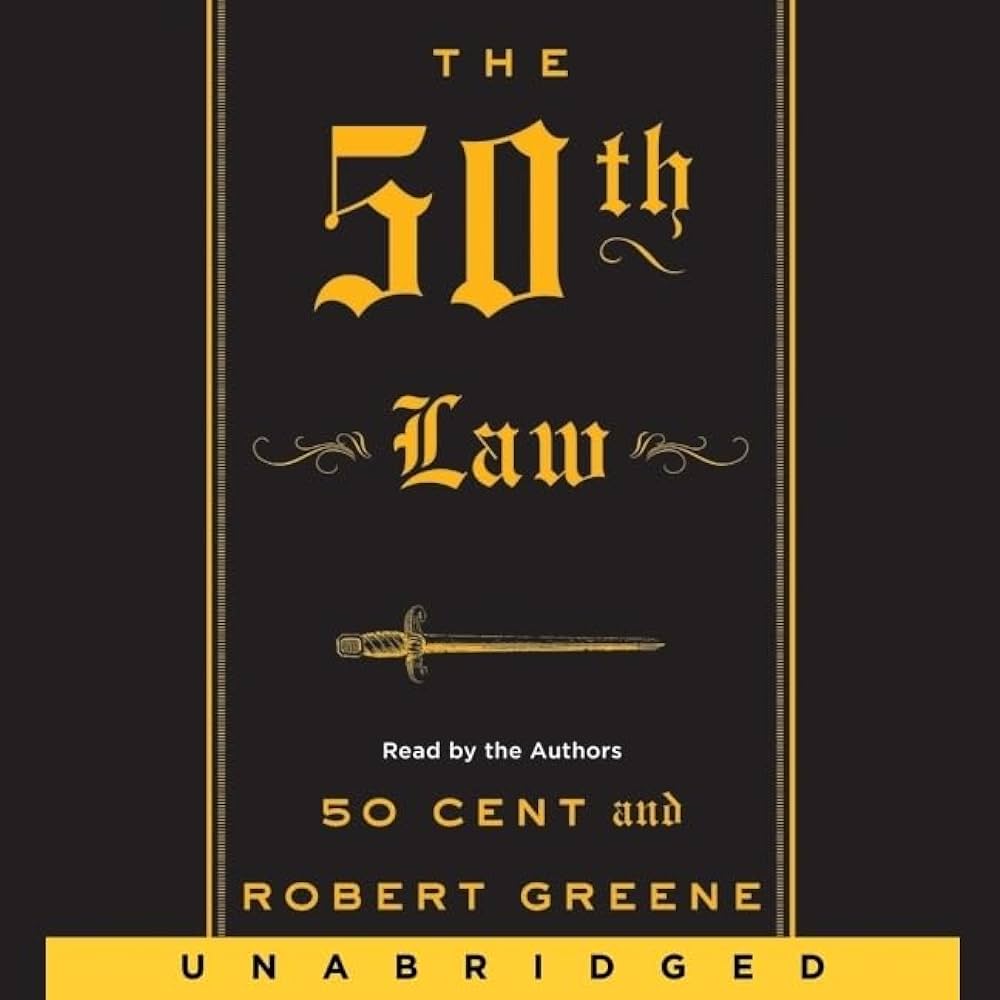
I highly recommend checking out the audible version of “The 50th Law” by 50 Cent & Robert Greene. Also, change the narration read to 1.2x for the best experience.
 You Can't Stop A Person With The Heart Of A Lion