I’ve let people walk all over me my entire life. I wasn’t born with one mean bone in my body, and I’ve always struggled with standing up for myself. Whether the disrespect was verbal or physical, I’ve constantly backed down in situations where I should’ve spoken up and let people know they were crossing my boundaries. Of course, being passive like this just resulted in more abuse since some people began to view me as easy prey. Someone they could use to boost their ego and wouldn’t fight back if push came to shove.
Somewhat recently, though, I decided I was tired of people punking me. I got into an argument with this guy, and he disrespected me more than anyone I’ve encountered. He got all up in my face and talked down to me, and the person who sent him to threaten me also sent a camera crew to film their intimidation. It was an ugly scene, and if there was a TV series where each episode showed a different time, I didn’t stand up for myself – This was the season finale.
When this guy was done violating me, I walked away feeling disappointed that I didn’t stand up for myself more. Even a nice guy like me knew this was a situation where I needed to toughen up and assert myself. The problem was my “Standing Up For Myself” muscle was so weak from never being used that I couldn’t tap into the energy needed to handle this encounter. I just defaulted back to my bad habit of submitting to the aggressor. I swore to myself after this incident that I would stop backing down from people who disrespected me.
After making this declaration, I was still timid for a while, but I finally gathered the courage to confront someone who acted outta pocket.
I used to deliver Marijuana to this guy who lived in a nice neighborhood. He never gave me friendly vibes or a tip for delivering his weed. I always got the impression that he felt like he was superior to me, and he treated me like a peasant. I arrived at his house for his routine delivery one day, but he wasn’t there. I started to get irritated, but the protocol was to wait 10 minutes before leaving and going to the next delivery. Right before his time was up, he pulled up at the last second. He parked his truck and walked past my car without acknowledging me. No “Hello” or “Sorry for making you wait”. Nothing. He just ignored me and walked straight into his house.
I figured he must have been rushing inside to grab some cash, so I gave him a few more minutes. My blood started to boil, though. After I waited a few minutes, he didn’t come out, so I looked in his house and saw him standing in the kitchen talking to someone and laughing. In no hurry whatsoever, making me wait for him like I was his bitch.
I immediately sped off, and my phone started ringing before I turned around the corner. I answered, and this guy started begging me to come back. He was apologizing profusely, but I let him have it. I told him that he was always rude to me, and I made it clear that if he ever disrespected me like this again, I wouldn’t deliver to him anymore.
When I returned to his house, we completed the transaction, and he gave me a tip for the first time ever. He probably felt like a huge dick and realized he was out of pocket. The respect between us had been established, and I never had a problem with him again. He also started giving me tips more frequently.
Always remember that in life, we teach people how to treat us. When we allow people to treat us poorly, we let them know it’s okay to use us as a punching bag. People will only bully you if they see you as someone who won’t defend themselves. They would never attack you if they felt you would stand up for yourself. That’s why bullies always fold when you fight back. They’re not expecting you to retaliate. You catch them off guard when you give them a dose of their own medicine.
Don’t go through life being a doormat for others. Have some self-respect and let people know it’s not okay to mess with you. They’ll leave you alone once they realize you won’t put up with their nonsense. If you’re a friendly person, transitioning from nice to assertive won’t be easy, but your life will become easier once you learn to handle confrontation. By addressing the problem upfront, you won’t have to worry about them harassing you.
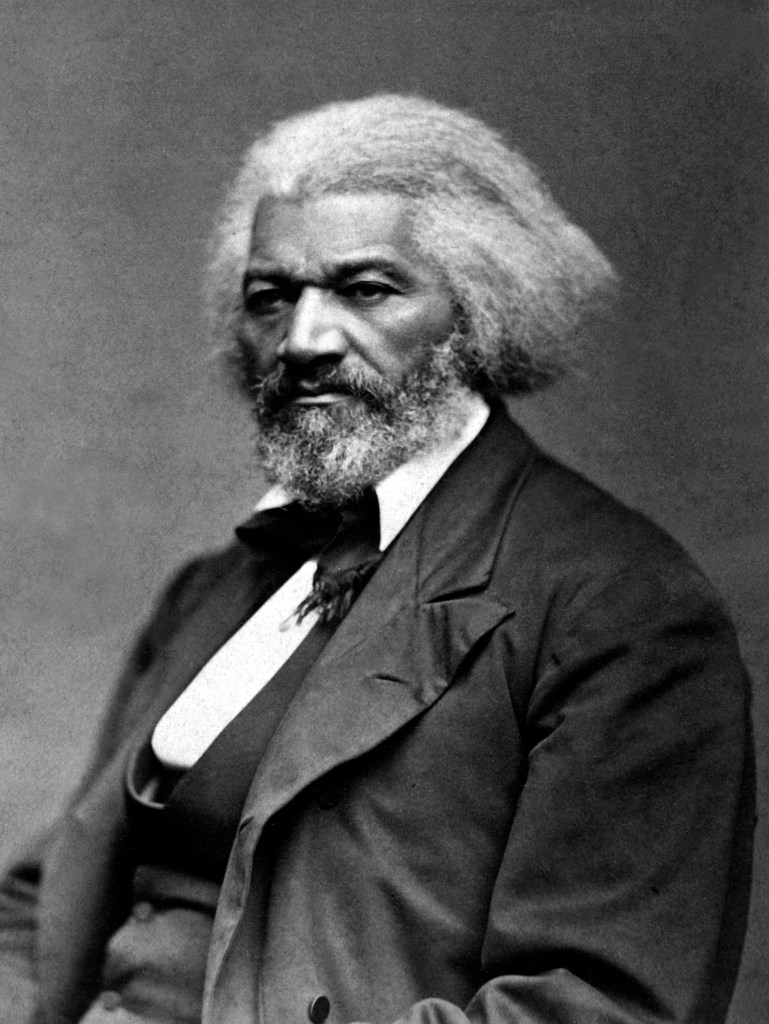
I was reading a book called The 33 Strategies of War by Robert Greene, and he shared a great story about the famous abolitionist Frederick Douglass. At one point, he was a slave and was sent to a nasty guy named Edward Covey, who was known for beating rebellious slaves into submission. The two of them got into a vicious fight where Frederick might have ended up dead, and instead of accepting defeat, he decided to fight back. The story below gives you a great example of the power of standing up for yourself, and hopefully, it will inspire you to speak up the next time someone crosses your boundaries.
Excerpt from “The 33 Strategies of War” by Robert Greene
“In 1833, Mr. Thomas Auld, the slaveholding owner of a plantation on Maryland’s Eastern Shore, summoned back his slave Frederick Douglass, fifteen years old at the time, from Baltimore, where Douglass had just spent seven years serving Auld’s brother. Now he was needed to work the fields of the plantation. But life in the city had changed Douglass in many ways, and to his chagrin he found it quite hard to disguise this from Auld. In Baltimore he had secretly managed to teach himself how to read and write, something no slave was allowed to do, for that would stimulate dangerous thoughts. On the plantation Douglass tried to teach as many slaves as possible to read; these efforts were quickly squashed. But what was worse for him was that he had developed a rather defiant attitude, what the slaveholder called impudence. He talked back to Auld, questioned some of his orders, and played all kinds of tricks to get more food. (Auld was notorious for keeping his slaves near starvation.)
One day Auld informed Douglass that he was hiring him out for a year to Mr. Edward Covey, a nearby farm renter who had earned a reputation as a consummate “breaker of young Negroes.” Slaveholders would send him their most difficult slaves, and in exchange for their free labor Covey would beat every last ounce of rebellion out of them. Covey worked Douglass especially hard, and after a few months he was broken in body and spirit. He no longer desired to read books or engage in discussions with his fellow slaves. On his days off, he would crawl under the shade of a tree and sleep off his exhaustion and despair.
One especially hot day in August 1834, Douglass became ill and fainted. The next thing he knew, Covey was hovering over him, hickory slab in hand, ordering him back to work. But Douglass was too weak. Covey hit him on the head, opening a deep wound. He kicked him a few times, but Douglass could not move. Covey finally left, intending to deal with him later.
Douglass managed to get to his feet, staggered to the woods, and somehow made his way back to Auld’s plantation. There he begged with Master Auld to keep him there, explaining Covey’s cruelty. Auld was unmoved. Douglass could spend the night but then must return to Covey’s farm.
Making his way back to the farm, Douglass feared the worst. He told himself that he would do his best to obey Covey and somehow survive the weeks ahead. Arriving at the stables where he was supposed to work that day, he began his chores, when out of nowhere, like a snake, Covey slithered in, rope in hand. He lunged at Douglass, trying to get a slipknot on his leg and tie him up. He was clearly intending the thrashing to end all thrashings.
Risking an even more intense beating, Douglass pushed Covey away and, without hitting him, kept him from getting the rope around his leg. At that moment something clicked in Douglass’s head. Every defiant thought that had been suffocated by his months of brutal labor came back to him. He was not afraid. Covey could kill him, but it was better to go down fighting for his life.
Suddenly a cousin came to Covey’s aid, and, finding himself surrounded, Douglass did the unthinkable: he swung hard at the man and knocked him to the ground. Hitting a white man would most likely lead to his hanging. A “fighting madness” came over Douglass. He returned Covey’s blows. The struggle went on for two hours until, bloodied, exhausted, and gasping for breath, Covey gave up and slowly staggered back to his house.
Douglass could only assume that Covey would now come after him with a gun or find some other way to kill him. It never happened. Slowly it dawned on Douglass: to kill him, or punish him in some powerful way, posed too great a risk. Word would get out that Covey had failed to break a Negro this one time, had had to resort to a gun when his terror tactics did not work. The mere hint of that would ruin his reputation far and wide, and his job depended on his perfect reputation. Better to leave the wild sixteen-year-old slave alone than risk the kind of crazy or unpredictable response Douglass had showed himself capable of. Better to let him calm down and go quietly away when his time of service there was over.
For the rest of Douglass’s stay with Covey, the white man did not lay a hand on him. Douglass had noticed that slaveholders often “prefer to whip those who are most easily whipped.” Now he had learned the lesson for himself: never again would he be submissive. Such weakness only encouraged the tyrants to go further. He would rather risk death, returning blow for blow with his fists or his wits.”

Link to buy “The 33 Strategies Of War” by Robert Greene on Amazon

 You Can't Stop A Person With The Heart Of A Lion
Brilliant connection to history and personal growth. Using Frederick Douglass as a lens makes the message even more powerful. A reminder that standing up for yourself can ripple through generations.
LikeLike