Anyone with a social media account has seen someone get canceled. Usually, it’s a public figure who gets caught doing something indefensible, and an internet mob forms around them. Initially, these vigilantes seemed fair and justified, targeting only the worst of the worst. But once they tasted their newfound power, something darker took root.
A new breed of user emerged to patrol the digital streets. Some were tasked with scanning new posts for anything remotely offensive, while others were instructed to review people’s social media history to see if they could dig up dirt. If someone’s had a Twitter account since 2009, that means scrolling through every tweet, hunting for anything that could be used against them.
If any incriminating evidence surfaced, it was made public immediately, and the person’s trial began online. Anyone with a social media account was welcome to serve on the jury. To streamline the process, all context surrounding the transgression was discarded, and the statute of limitations was abolished. All that mattered was that the person made a mistake, and now the internet demanded punishment.
Once the court’s in session, jurors are advised to review the case quickly and post their verdicts in the comment section. Why the rush? Every day, a new person is caught violating the moral law, and there’s no time for a thorough investigation when there’s a never-ending list of people who also need to see the judge for their offenses.
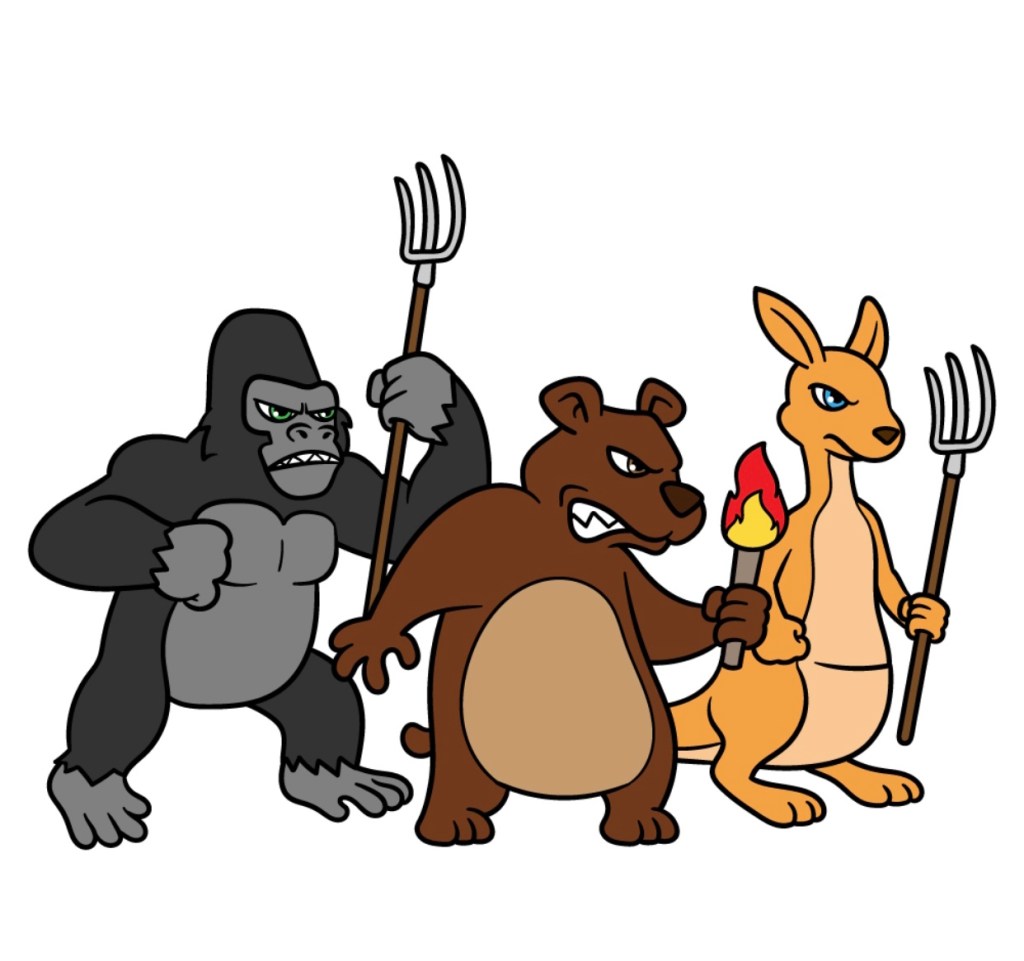
If it’s determined that a person is guilty, the verdict is simple: withdraw all public support. If they’re an actor, that means no longer watching their movies; if they’re a musician, it means no longer streaming their music, and so on. In the event a regular person is exposed, an investigation begins to determine where they work. Once discovered, the company’s information is posted online, allowing trolls to harass them until their employment is terminated. After that person’s life and reputation have been destroyed, the group gathers their pitchforks and torches and begins searching for the next person to cancel.
Members of Cancel Culture work 365 days a year, rotate morning and evening shifts, and are willing to work on holidays without bonus pay. They have an obligation to society and will stop at nothing to make sure every sinner faces their judgment.
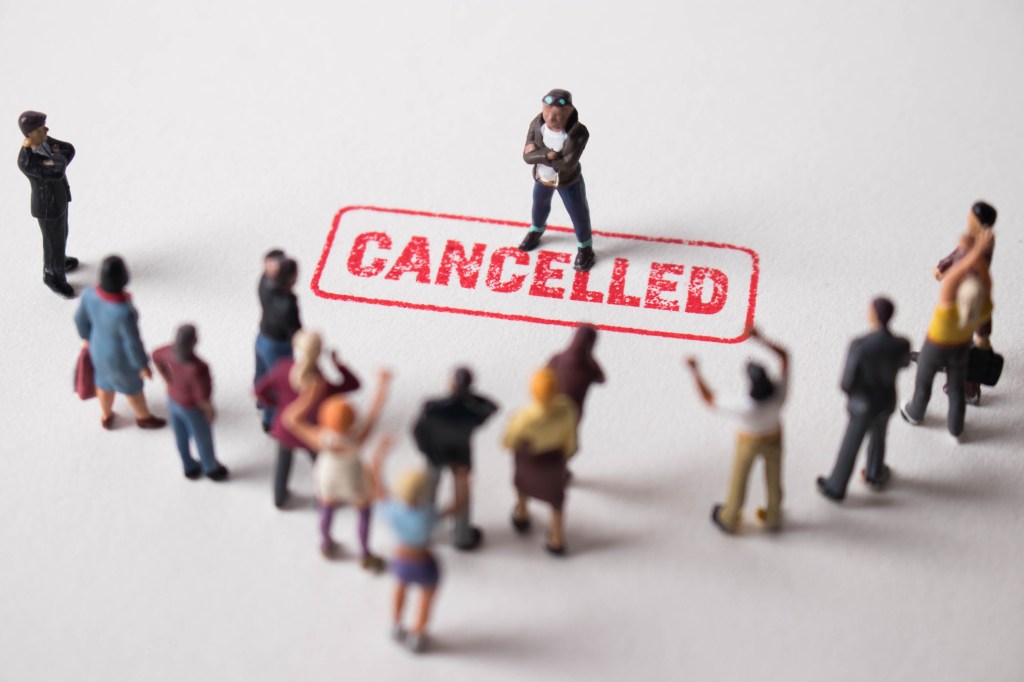
I was aware of cancel culture before it had a formal name, but this was the first year I started paying attention to it. It caught my attention after I began using Twitter more frequently and noticed that someone new was getting canceled every day. Sometimes the backlash felt justified because the offense was so egregious, while other times it seemed like people were offended by nothing more than a different opinion.
Regardless of what happened, one thing was clear: the reaction was always extreme.
The only positive thing I noticed about cancel culture is that it doesn’t discriminate against anyone. Its members don’t care what color your skin is, how old you are, or who you’re voting for come election time. I realized nobody was safe when I went online and saw people trying to cancel Tony Robbins. If they were willing to go after the king of positivity, we were all fucked. You could be lower class, middle class, upper class, or even part of the elite. Everyone was fair game, and nobody was off-limits.
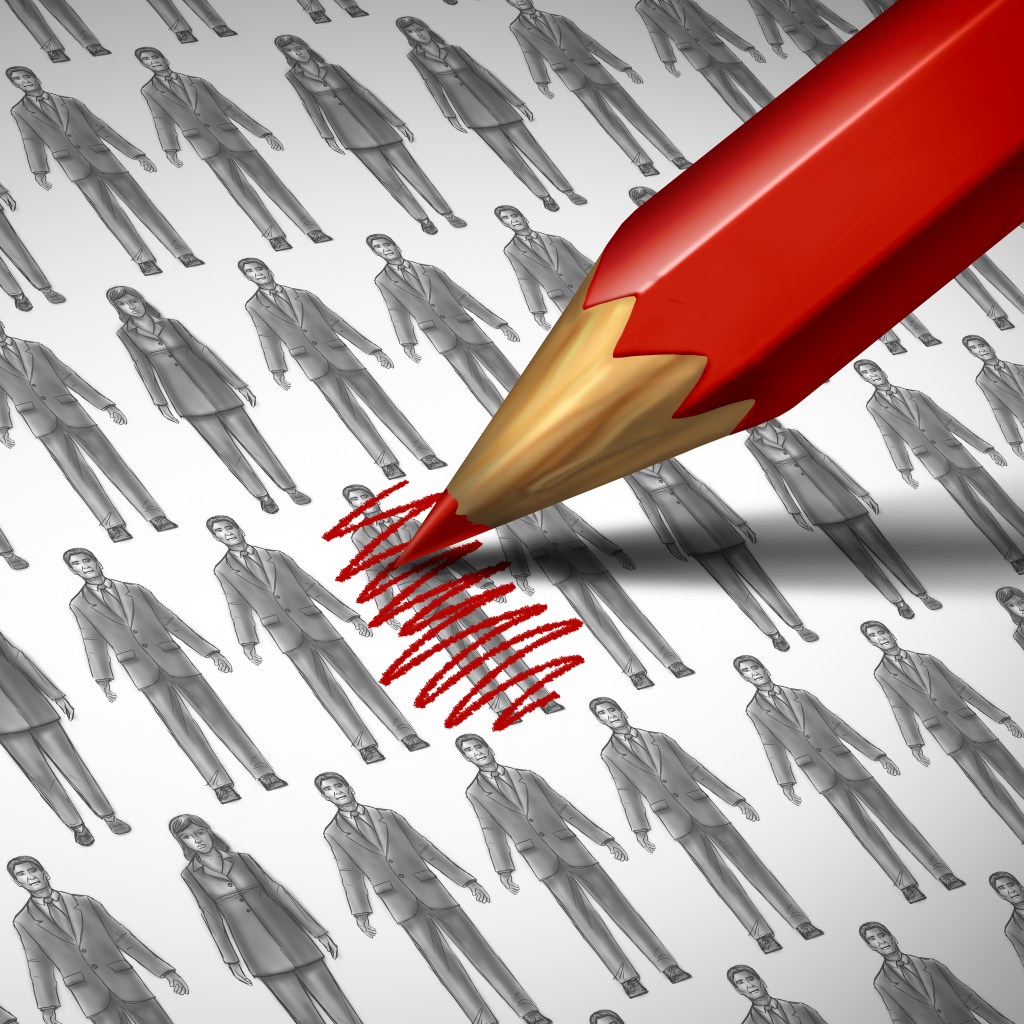
I understand people have to be held accountable for their actions. On the surface, it may seem like the individuals getting canceled deserve what’s coming to them. It’s hard to feel bad for people caught doing deplorable things. The problem is that an unfair system has been created with no possible recourse for the person in the wrong. They don’t want accountability; they want exile, and they’ll work aggressively to make that happen.
People are ruthless online because they have no connection to the person they’re attacking. If a family member or friend were caught doing the same thing, they would never be so quick to condemn them. People don’t have the same compassion for strangers as they do for the people they care about. They’re also fiercer in their judgment when they can hide behind private or anonymous accounts.
These online Avengers come off like they’re fighting for a good cause, but they’re really using vulnerable people as scapegoats for their own pent-up frustrations. It gives them a sense of relief to band together online and attack strangers from behind a screen. Social media has created a new form of therapy called “Kicking People When They’re Down,” and a disturbing number of people participate in it.
I’ll occasionally scroll through the comment section when someone’s getting canceled and look at the profiles of people leaving hateful comments. It never fails to amuse me when I go to their page and see positive quotes like “Be kind to others” or “Forgiveness Is Key.” You know they probably felt great when they posted it and racked up likes, but when it came time to put that message into practice, the same energy was nowhere to be found.
The irony is that everyone has done or said something that could get them canceled. We all have things in our past that could get us in trouble if brought to the public’s attention. Even if you examined someone’s entire life and couldn’t find anything to use against them, I guarantee that if a transcript existed containing every thought that ever crossed their mind, they would get fired from their job, arrested, and possibly given a life or death sentence.
No one wants to admit this, but we all know it’s true.
When people mess up, you don’t just cancel them and take away their ability to make a living. That puts them in a desperate mental state where they might commit suicide, turn to drugs, or spiral into a place where they become a burden to the people around them. Not to mention, some people have families who depend on them. The absurdity of it all becomes clear the moment you look up the actual definition of “cancel.”
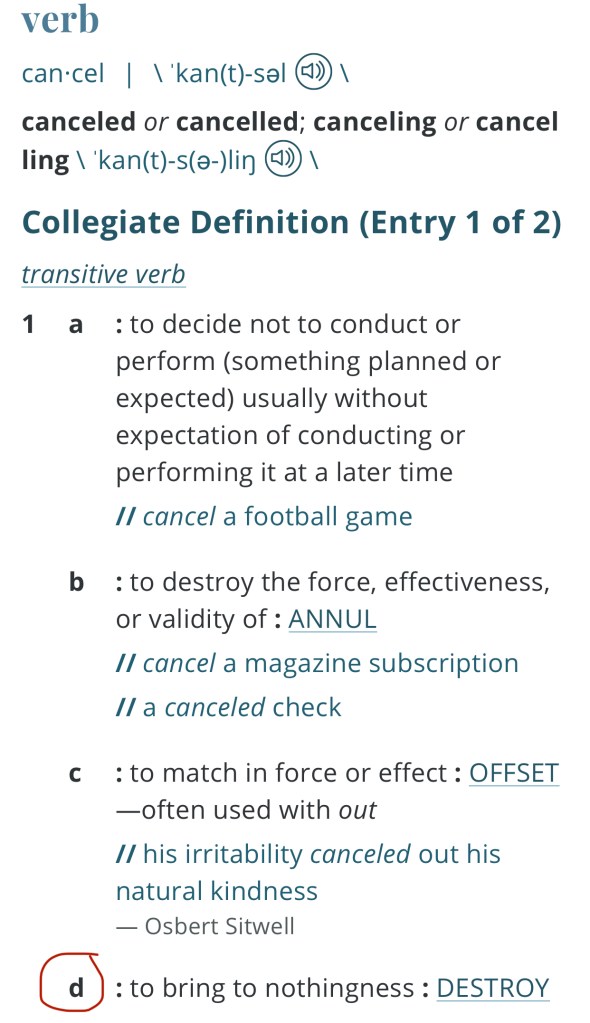
Bringing someone to nothingness and destroying their life sounds a little excessive to me. People can evolve over time, and giving up on them prematurely is a mistake. Some of the most revered people in history came from troubled backgrounds, and when we look back on our own lives, most of us experienced our greatest personal growth after a failure or mishap. Holding a negative event over someone’s head for the rest of their life is straight-up cruel. Unless a person has done something truly wicked and poses a danger to society, most people deserve an opportunity to redeem themselves.
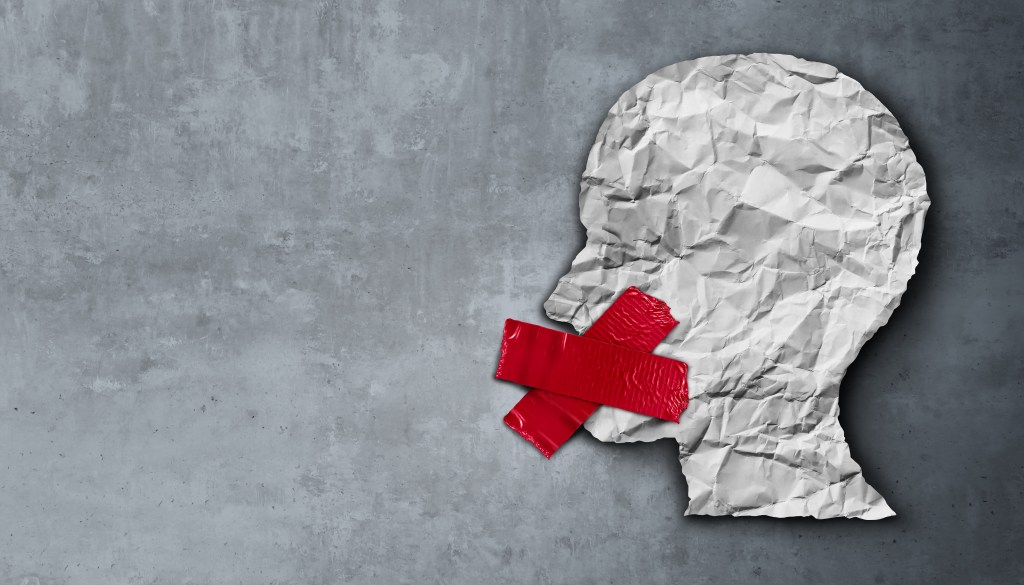
Besides people’s lives being at stake, we’re also seeing freedom of speech in danger. As the saying goes, “There’s freedom of speech but not freedom of consequence,” and that’s never been truer than today. Anyone caught saying something that isn’t 100% politically correct is immediately attacked by waves of people online. They’ll even twist your words to make you look like a villain, and by the time the truth comes out, the damage is already done.
If you’re an artist and write a song about a bad experience with a woman, they’ll label you a misogynist. Find an old tweet where you called something retarded, and suddenly you’re accused of mocking people with disabilities.
They’ll create a compelling narrative and persuade people to believe their interpretation of events.
If you genuinely mess up and apologize, they’ll say you’re only doing so because you got caught, and if you ignore them, it means you’re guilty. No matter how you respond, you can’t win.
Everything that happens online also affects the real world.
Every corporation wants a perfect reputation, so they usually cave to online pressure and disassociate themselves from the person receiving bad publicity. If a CEO is under fire, you can expect them to resign shortly after the controversy breaks. If it’s an athlete or musician, you can bet their sponsors will drop them until the controversy fades away.
Very rarely will a company stand behind someone going through a public storm.
Because of our society’s increased sensitivity, people have to think twice before saying what’s on their mind. You have to consider whether expressing your opinion or creating controversial art is worth the blowback it brings. It’s unfortunate because most of what needs to be said makes people uncomfortable, and in today’s world, that discomfort can cost you work, friendships, and future opportunities. It’s sad to say, but these individuals wield extraordinary power online, and they can significantly alter your life if they believe you’ve stepped out of line.
People have always been judgmental, but social media has given them a far more effective platform to express it. It’s scary to think we now live in a world where you can’t make mistakes or voice your opinion without being ostracized. There’s never been a time in history when people have been under more pressure to craft a perfect façade and defend it relentlessly. Individuality is slowly disappearing as people conceal their true selves to avoid becoming the next person kicked off the raft.
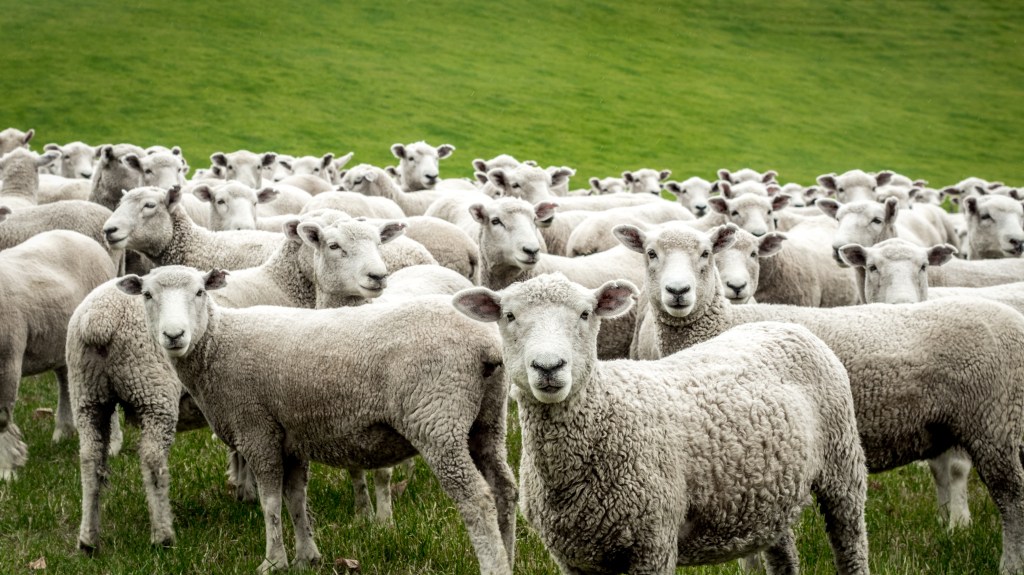
Everyone’s morphing into the same white sheep, trying to avoid standing out and drawing attention.
To be frank, I don’t see cancel culture ending anytime soon. I will say, though, that I’ve noticed more people pushing back against it. For a while, the movement felt completely unchecked, but now people seem to be growing tired of it. Controversy can be entertaining every now and then, but when there’s a new scandal every day, it becomes exhausting. Even after someone dies, people rush to the comment section to remind mourners of what the deceased person did while they were alive.
It’s strange that we now have an army of people online who feel they have the authority to dictate what’s acceptable and what’s not, and who deserves a second chance and who doesn’t. That kind of power puts a real fear in people that anything they do, say, or create could get them canceled. It’s really a form of bullying, and the whole movement should be recognized as a threat to humanity.
Whether it’s the refusal to let people redeem themselves or the constant outrage over trivial matters, this new form of online policing poses a threat to all of us and should be taken very seriously.
Make a one-time donation
Choose an amount
Or enter a custom amount
Your contribution is appreciated.

