Get Rich or Die Tryin’

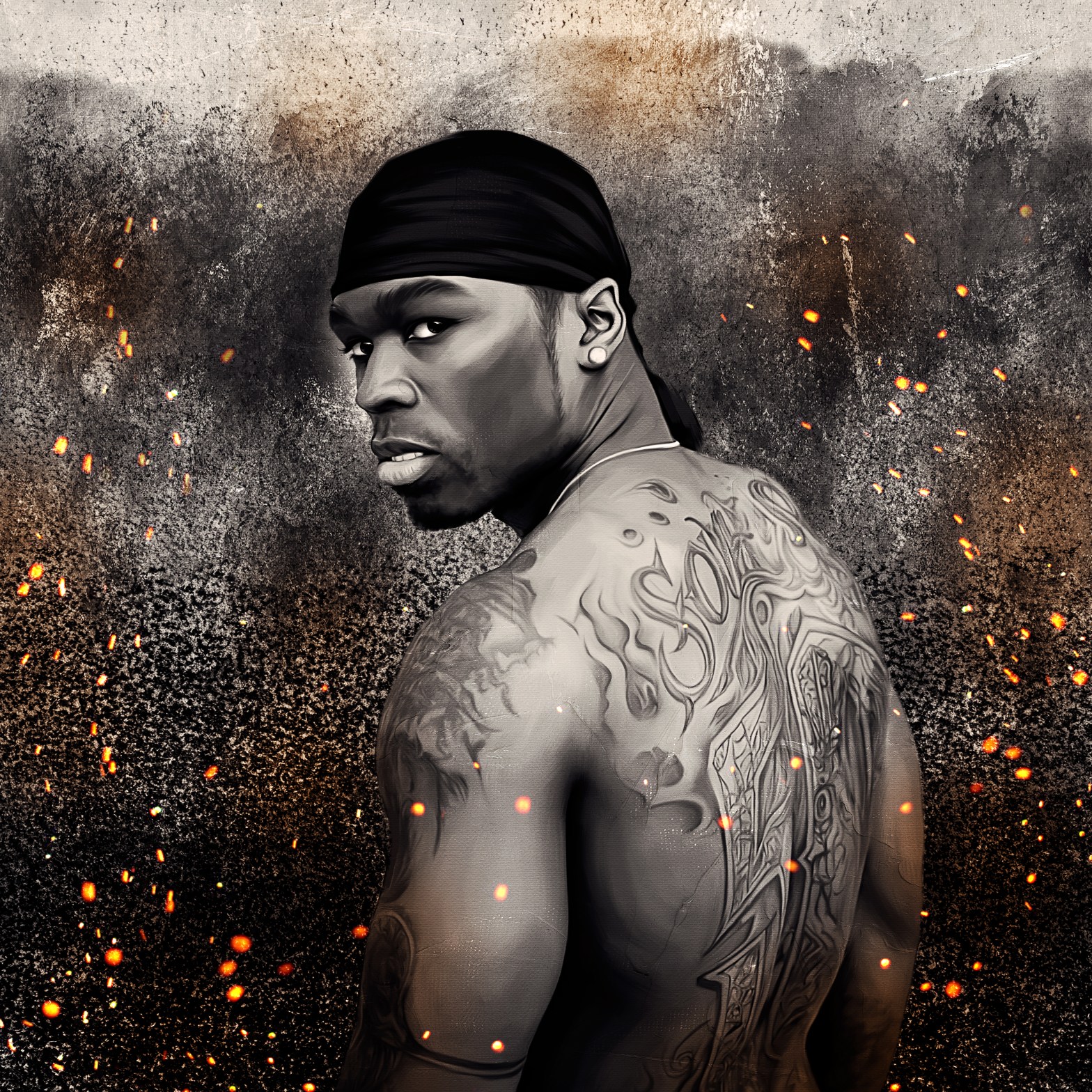
I’ve been a fan of 50 Cent since the first time I heard “In Da Club” as a teenager. The songs an absolute banger, and seeing the music video where 50’s being operated on by Dr.Dre and Eminem (my favorite rapper) made me an instant fan. Of course, 50’s debut album “Get Rich Or Die Tryin'” was a classic too, and sold 12 Million copies in 2003, making it the best selling record of the year. He followed that up with another great project, “The Massacre,” and then starred as himself in a movie about his life. He also had his own rap group called G-Unit, a sneaker line through Reebok, and a video game series where you went around killing gangsters in the New York underworld.

For a few years in the 2000s, there was no doubt the #1 rapper in the world was 50 Cent.

50 has an incredible life story and had to overcome a lot of adversity in his rise to success, but the one thing most people know about him is that at one point, he was shot 9 times and barely survived. It’s absurd to think that someone actually put that many bullets into him, and somehow, not even 1 of them killed him. And then miraculously, after that, he recovered, continued pursuing his dreams, and ended up becoming a global superstar.

A story that seems so unbelievable but did, in fact, happen.

Many years later, when I was a young adult, I found out that 50 had collaborated with the author of “The 48 Laws Of Power,” Robert Greene, on a book called “The 50th Law.” The book focuses on 50 Cent’s life story and the fear that paralyzes us from pursuing our dreams. I was going through a dark period in my life where I was dealing with a lot of fear myself, so it reached me at the perfect time. The content resonated with me and gave me a new mindset to tackle my challenges. It quickly became my favorite book and something I constantly referred to as I progressed through life.

My favorite chapter in the book gives an inside look at the time 50 Cent almost got assassinated, and his dreams were temporarily shattered. I never knew the whole story surrounding 50 getting shot, and this chapter gives you all the gritty details on how it affected him and the adversity he had to overcome following the shooting. Then, Robert talks about how we can avoid succumbing to a victim mentality and look at the drama we face as a blessing instead of a curse.

We all face hardships, and I think this chapter will motivate anyone struggling to stand up and keep fighting. If you find the information useful, check out the full book. It’s full of gems that will help you get through the tough battles we all face in life 💎.

Excerpt from “The 50th” Law by 50 Cent & Robert Greene

Chapter 3 – Turn Shit into Sugar – Opportunism 

Every negative situation contains the possibility for something positive, an opportunity. It is how you look at it that matters. Your lack of resources can be an advantage, forcing you to be more inventive with the little that you have. Losing a battle can allow you frame yourself as the sympathetic underdog. Do not let fears make you wait for a better moment or become conservative. If there are circumstances you cannot control, make the best of them. It is the ultimate alchemy to transform all such negatives into advantages and power. 

Hood Alchemy

“If one is continually surviving the worst that life can bring, one eventually ceases to be controlled by a fear of what life can bring.”

James Baldwin

For well over a year 50 Cent had been working on what was meant to be his debut album, Power of the Dollar, and finally in the spring of 2000 it was ready to be released by Columbia Records. It represented to him all the struggles he had been through on the streets, and he had hopes that it would turn his life around for good. In May of that year, however, a few weeks before the launch date, a hired assassin shot nine bullets into him while he sat in the back of a car, one bullet going through his jaw and nearly killing him. 

In a flash, all of the momentum he had built up reversed itself. Columbia canceled the release of the record and dropped Fifty from his contract. There was too much violence associated with him; it was bad for business. A few inquiries made it clear that other labels felt the same—he was being blackballed from the industry. One executive told him flatly he would have to wait at least two years before he could think of resurrecting his career.

The assassination attempt was the result of an old drug beef from his days as a dealer; the killers could not afford to let him survive and would try to finish the job. Fifty had to keep a low profile. At the same time, he had no money and could not return to street hustling. Even many of his friends, who had hoped to be part of his success as a rapper, started to avoid him. 

In just a few short weeks he had gone from being poised for fame and fortune to hitting the bottom. And there seemed no way to move out of the corner he found himself in. Could this be the end of all his efforts? It would have been better to die that day than to feel this powerlessness. But as he lay in bed at his grandparents’ house, recovering from the wounds, he listened a lot to the radio, and what he heard gave him an incredible rush of optimism: an idea started taking shape in his mind that the shooting was in fact a great blessing in disguise, that he had narrowly survived for a reason.

The music on the radio was all so packaged and produced. Even the tough stuff, the gangsta rap, was fake. The lyrics did not reflect anything from the streets that he knew. The attempt to pass it off as real and urban angered him to a point he could not endure. This was not the time for him to be afraid and depressed, or to sit around and wait a few years while all of the violence around him died down. He had never been a fake studio gangsta and now he had the nine bullet wounds to prove it. This was the moment to convert all of his anger and dark emotions into a powerful campaign that would shake the very foundations of hip-hop. 

As a hustler on the streets Fifty had learned a fundamental lesson: Access to money and resources is severely limited in the hood. A hustler must transform every little event and every trifling object into some gimmick for making money. Even the worst shit that happens to you can be converted into gold if you are clever enough. All of the negative factors now facing him—little money, no connections, the price on his head—could be turned into their opposites, advantages and opportunities. That is how he would confront the seemingly insurmountable obstacles now in his path.

He decided to disappear for a few months and, holed up in various friends’ houses, he began to re-create himself and his music career. With no executives to have to please or worry about, he could push his lyrics and the hard sounds as far as he wanted. His voice had changed as a result of the pieces of bullet still lodged in his tongue—it now had a hiss. It was still painful for him to move his mouth, so he had to rap more slowly. Instead of trying to normalize and retrain his voice, he determined to turn it into a virtue. His new style of rapping would be more deliberate and menacing; that hiss would remind listeners of the bullet that had gone through his jaw. He would play all of that up. 

In the summer of 2001, just as people had begun to forget about him, Fifty suddenly released his first song to the streets. It was called “Fuck You,” the title and the lyrics summarizing how he felt about his killers—and everyone who wanted him to go away. Just putting out the song was message enough—he was defying his assassins openly and publicly. Fifty was back, and to shut him up they would have to finish the job. The palpable anger in his voice and the hard-driving sound of the song made it a sensation on the streets. It also came with an added punch—because he seemed to be inviting more violence, the public had to grab up everything he produced before he was killed. The life-and-death angle made for a compelling spectacle.

Now the songs started to pour out of him. He fed off all the anger he felt and the doubts people had had about him. He was also consumed with a sense of urgency—this was his last chance to make it and so he worked night and day. Fifty’s mix-tapes began to hit the street at a furious pace. 

Soon he realized the greatest advantage he possessed in this campaign—the feeling that he had already hit bottom and had nothing to lose. He could attack the record industry and poke fun at its timidity. He could pirate the most popular songs on the radio and put his own lyrics over them to create wicked parodies. He didn’t care about the consequences. And the further he took this the more his audiences responded. They loved the transgressive edge to it. It was like a crusade against all the fake crap on the radio, and to listen to Fifty was to participate in the cause.

On and on he went, transforming every conceivable negative into a positive. To compensate for the lack of money to distribute his mix-tapes far and wide, he decided to encourage bootleggers to pirate his tracks and spread his music around like a virus. With the price still on his head, he could not give concerts or do any kind of public promotion; but somehow he turned even this into a marketing device. Hearing his music everywhere but not being able to see him only added to the mystique and the attention people paid to him. Rumors and word of mouth helped form a kind of Fifty mythology. He made himself even scarcer to feed this process. 

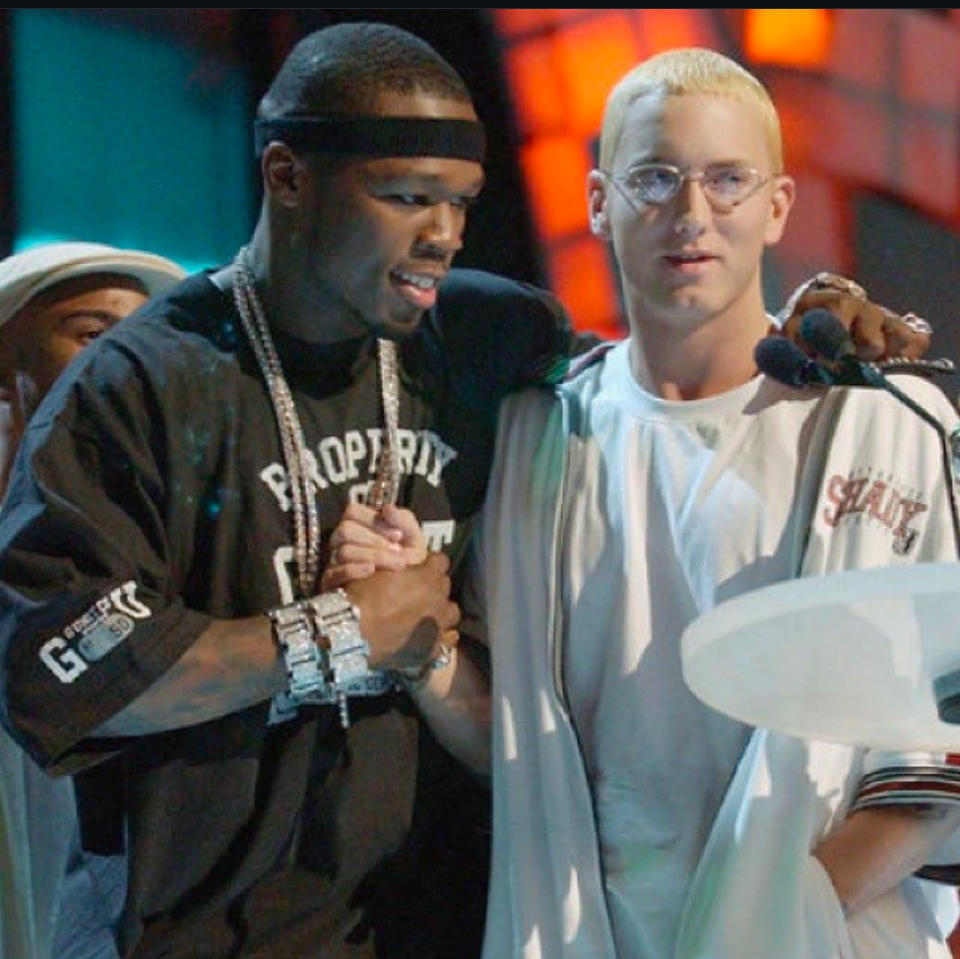
The momentum now was devastating—you could not go far in New York without hearing his music blasted from some corner. Soon one of his mix-tapes reached the ears of Eminem, who decided this was the future of hip-hop and quickly signed Fifty in early 2003 to his and Dr. Dre’s label, Shady Aftermath, completing one of the most rapid and remarkable turnarounds in fortune in modern times.
The Fearless Approach

“Every negative is a positive. The bad things that happen to me, I somehow make them good. That means you can’t do anything to hurt me.”

50 Cent

Events in life are not negative or positive. They are completely neutral. The universe does not care about your fate; it is indifferent to the violence that may hit you or to death itself. Things merely happen to you. It is your mind that chooses to interpret them as negative or positive. And because you have layers of fear that dwell deep within you, your natural tendency is to interpret temporary obstacles in your path as something larger—setbacks and crises.

In such a frame of mind, you exaggerate the dangers. If someone attacks and harms you in some way, you focus on the money or position you have lost in the battle, the negative publicity, or the harsh emotions that have been churned up. This causes you to grow cautious, to retreat, hoping to spare yourself more of these negative things. It is a time, you tell yourself, to lay low and wait for things to get better; you need calmness and security.

What you do not realize is that you are inadvertently making the situation worse. Your rival only gets stronger as you sit back; the negative publicity becomes firmly associated with you. Being conservative turns into a habit that carries over into less difficult moments. It becomes harder and harder to move to the offensive. In essence you have chosen to cast life’s inevitable twists of fortune as hardships, giving them a weight and endurance they do not deserve. 

What you need to do, as Fifty discovered, is take the opposite approach. Instead of becoming discouraged and depressed by any kind of downturn, you must see this as a wake-up call, a challenge that you will transform into an opportunity for power. Your energy levels rise. You move to the attack, surprising your enemies with boldness. You care less what people think about you and this paradoxically causes them to admire you—the negative publicity is turned around. You do not wait for things to get better—you seize this chance to prove yourself. Mentally framing a negative event as a blessing in disguise makes it easier for you to move forward. It is a kind of mental alchemy, transforming shit into sugar.

Understand: we live in a society of relative prosperity, but in many ways this turns out to be a detriment to our spirit. We come to feel that we naturally deserve good things, that we have certain privileges due to us. When setbacks occur, it is almost a personal affront or punishment. “How could this have happened?” we ask. We either blame other people or we blame ourselves. In both cases, we lose valuable time and become unnecessarily emotional. 

In places like the hood or in any kind of materially impoverished environment, the response to hardship is much different. There, bad things happening assume a kind of normality. They are part of daily life. The hustler thinks: “I must make the most of what I have, even the bad stuff, because things are not going to get better on their own. It is foolish to wait; tomorrow may bring even worse shit.” If Fifty had waited, as he had been counseled, he would be just another rapper who had had a moment of success and then faded quickly away. The hood would have consumed him.

This hustler mind-set is more realistic and effective. The truth is that life is by nature harsh and competitive. No matter how much money or resources you have accumulated, someone will try to take them from you, or unexpected changes in the world will push you backward. These are not adverse circumstances but merely life as it is. You have no time to lose to fear and depression, and you do not have the luxury of waiting. 

All of the most powerful people in history demonstrate in one way or another this fearless attitude towards adversity. Look at George Washington. He was a wealthy landowner but his attitude towards life had been forged by years fighting for the British in the French and Indian War, amid the harsh environment of frontier America. In 1776, Washington was made supreme commander of the American Revolutionary army. At first glance this position seemed more like a curse. The army was a semi-organized mob. It had no training, was poorly paid and outfitted, and its morale was low—most of the soldiers did not really believe they could succeed in defeating the all-powerful British.

Throughout 1777, British forces pushed this weak American army around, from Boston to New York, until by the end of the year Washington had been forced to retreat to New Jersey. This was the darkest moment in his career and in the war for independence. Washington’s army had dwindled to a few thousand men; they had little food and were poorly clothed, during one of the bitterest winters in memory. The American Continental Congress, fearing imminent disaster, fled from Philadelphia to Baltimore. 

Assessing this situation, a cautious leader would have chosen to wait out the winter, muster more troops, and hope for some change in fortune. But Washington had a different mind-set. As he perceived it, his army would be considered by the British as too weak to pose any threat. Being small, his army could move without the enemy’s knowledge, and launch an attack that was all the more surprising for coming out of nowhere. Moving to the attack would excite the troops and gain some much-needed positive publicity. Thinking in this manner, he decided to lead a raid on an enemy garrison in Trenton, which proved to be a great success. He followed this up with an attack on British supplies at Princeton. These daring victories captivated the American public. Confidence had been restored in Washington as a leader and the American army as a legitimate force.

From then on, Washington waged a guerrilla-style war, wearing out the British with the great distances they had to cover. Everything was turned around—lack of funds and experience led to a more creative way of fighting. The smallness of his forces allowed him to torment the enemy with fluid maneuvering over rough terrain. At no point did he decide to wait for more troops or more money or better circumstances—he went continually on the attack with what he had. It was a campaign of supreme fearlessness, in which all negatives were converted into advantages. 

This is a common occurrence in history: almost all great military and political triumphs are preceded by some kind of crisis. That is because a substantial victory can only come out of a moment of danger and attack. Without these moments, leaders are never challenged, never get to prove themselves. If the path is too smooth, they grow arrogant and make a fatal mistake. The fearless types require some kind of adversity against which they can measure themselves. The tenseness of such dark moments brings out their creativity and urgency, making them rise to the occasion and turn the tide of fortune from defeat to a great victory.

You must adopt an attitude that is the opposite to how most people think and operate. When things are going well, that is precisely when you must be concerned and vigilant. You know it will not last and you will not be caught unprepared. When things are going badly, that is when you are most encouraged and fearless. Finally you have material for a powerful reversal, a chance to prove yourself. It is only out of danger and difficulty that you can rise at all. By simply embracing the moment as something positive and necessary you have already converted it into gold.

Keys To Fearlessness

“In nooks all over the earth sit men who are waiting, scarcely knowing in what way they are waiting in vain. Occasionally the call that awakens – That accident which gives the “Permission to act – Comes too late, when the best youth and strength for action has already been used up by sitting still; And many have found to their horror when they “leaped up” that their limbs had gone to sleep and their spirit had become too heavy. “It is too late,” they said to themselves, having lost their faith in themselves and henceforth forever useless.”

Friedrich Nietzsche

Our minds possess powers we have not even begun to tap into. These powers come from a mix of heightened concentration, energy, and ingenuity in the face of obstacles. Each of us has the capacity to develop these powers, but first we have to be aware of their existence. This is difficult, however, in a culture that emphasizes material means—technology, money, connections—as the answer to everything. We place unnecessary limits on what the mind can accomplish, and that becomes our reality. Look at our concept of opportunity and you will see this in its clearest light. 

According to conventional wisdom, an opportunity is something that exists out there in the world; if it comes our way and we seize it, it brings us money and power. This could be a particular job, the perfect fit for us; it could be a chance to create or join a new venture. It could be meeting the appropriate person. In any event, it depends on being at the right place at the right time and having the proper skills to take advantage of this propitious moment. We generally believe there are only a few such golden chances in life, and most of us are waiting for them to cross our path.

This concept is extremely limited in scope. It makes us dependent on outside forces. It stems from a fearful, passive attitude towards life that is counterproductive. It constrains our minds to a small circle of possibility. The truth is that for the human mind, everything that crosses its path can be a potential tool for power and expansion. 

Many of us have had the following experience: we find ourselves in an urgent, difficult situation. Perhaps we have to get something done in an impossibly short amount of time, or someone we had counted on for help does not come through, or we are in a foreign land and must suddenly fend for ourselves. In these situations, necessity crowds in on us. We have to get work done and figure out problems quickly or we suffer immediate consequences. What usually happens is that our minds snap to attention. We find the necessary energy because we have to. We pay attention to details that normally elude us, because they might spell the difference between success and failure, life and death. We are surprised at how inventive we become. It is at such moments that we get a glimpse of that potential mental power within us that generally lies untapped. If only we could have such a spirit and attitude in everyday life.

This concept is extremely limited in scope. It makes us dependent on outside forces. It stems from a fearful, passive attitude towards life that is counterproductive. It constrains our minds to a small circle of possibility. The truth is that for the human mind, everything that crosses its path can be a potential tool for power and expansion. 

Many of us have had the following experience: we find ourselves in an urgent, difficult situation. Perhaps we have to get something done in an impossibly short amount of time, or someone we had counted on for help does not come through, or we are in a foreign land and must suddenly fend for ourselves. In these situations, necessity crowds in on us. We have to get work done and figure out problems quickly or we suffer immediate consequences. What usually happens is that our minds snap to attention. We find the necessary energy because we have to. We pay attention to details that normally elude us, because they might spell the difference between success and failure, life and death. We are surprised at how inventive we become. It is at such moments that we get a glimpse of that potential mental power within us that generally lies untapped. If only we could have such a spirit and attitude in everyday life.

This attitude is what we shall call “opportunism.” True opportunists do not require urgent, stressful circumstances to become alert and inventive. They operate this way on a daily basis. They channel their aggressive energy into hunting down possibilities for expansion in the most banal and insignificant events. Everything is an instrument in their hands, and with this enlarged notion of opportunity, they create more of it in their lives and gain great power.

Perhaps the greatest opportunist in history is Napoleon Bonaparte. Nothing escaped his attention. He focused with supreme intensity on all the details, finding ways to transform even the most trivial aspects of warfare – how to march and carry supplies, how to organize troops into divisions – into tools of power. He ruthlessly exploited the slightest mistake of his opponents. He was the master at turning the worst moments in battle into material for a devastating counterattack. 

All of this came out of Napoleon’s determination to see everything around him as an opportunity. By looking for these opportunities, he found them. This became a mental skill that he refined to an art. This power is open to each and everyone one of us if we put into practice the following four principles of the art.

Make The Most Of What You Have

In 1704, a Scottish sailor named Alexander Selkirk found himself marooned on a deserted island some four hundred miles off the coast of Chile. All he had with him was a rife, some gunpowder, a knife, and some carpenter’s tools. In exploring the interior, he saw nothing but a bunch of goats, cats, rats, and some unfamiliar animals that made strange noises at night. It was a shelterless environment. He decided to keep to the shoreline, slept in a cave, found enough to eat by catching fish, and slowly gave way to a deep depression .He knew he would run out of gunpowder, his knife would get rusty, and his clothes would rot on his back. He could not survive on just fish. He did not have enough supplies to get by and the loneliness was crushing. If only he had brought over more materials from his ship.

Then suddenly the shoreline was invaded by sea lions; it was their mating season. Now he was forced to move inland. There, he could not simply harpoon fish and sit in a cave brooding. He quickly discovered that this dark forest contained everything he needed. He built a series of huts out of the native woods. He cultivated various fruit trees. He taught himself to hunt the goats. He domesticated dozen of feral cats – they protected him against the rats and provided him much needed companionship. He took apart his useless rifle and fashioned tools out of it. Recalling what he learned from his father, who had been a shoemaker, he made his own clothes out of animal hides. It was as if he had suddenly come to life and his depression disappeared. He was finally rescued from the island, but the experience completely altered his way of thinking. Years later he would recall his time there as the happiest in his life.

Most of us are like Selkirk when he first found himself stranded – we look at our material resources and wish we had more. But a different possibility exists for us as well – the realization that more resources are not necessarily coming from the outside and that we must use what we already have to better effect. What we have in hand could be research material for a particular book, or people who work within our organization.  If we look for more – information, outside people to help us – it won’t necessarily lead to anything better; in fact the waiting and the dependence makes us less creative. When we go to work with what is there, we find new ways to employ this material. We solve problems, develop skills we can use again and again, and build up our confidence. If we become wealthy and dependent on money and technology, our minds atrophy and that wealth will not last.

Turn All Obstacles Into Openings

The great boxer Joe Louis encountered a tremendous obstacle in the racism of the 1930s. Jack Johnson had preceded Louis as the most famous black boxer of his time. Louis as the most famous black boxer of his time. Johnson was supremely skilled and he beat his white opponents with ease, but he was an emotional fighter – encountering hostile crowds that chanted “Kill the nigger” only made him more heated and agry. He found himself in constant trouble and quickly burned out from all the hatred.

Louis was equally talented but as he perceived it, he could not gloat or show emotion in the ring – that would incite the white audiences and feed into the stereotype of the out-of-control black boxer. And yet a fighter thrives off his emotions, his fighting spirit, and uses this to overwhelm his opponent. Instead of rebelling against this state of affairs or giving up, Louis decided to use it to his advantage. He would show no emotions in the ring. After knocking someone out, he would calmly return to his corner. Opponents and the audience would try to bait him into an emotional response, but he resisted. All of his spirit and ager went into forging this cold and intimidating mask. the racists could not rail against this. He became known as the “Embalmer,” and it was enough to see his grim expression when you entered the ring to feel your legs getting weak. In essence, Louis turned this obstacle into his greatest strength.

An opportunist in life sees all hindrances as instruments for power. The reason is simple: negative energy that comes at you in some form is energy that can be turned around – to defeat an opponent and lift you up. When there is no such energy, there is nothing to react or push against; it is harder to motivate yourself. Enemies that hit you have opened themselves up to a counterattack in which you control the timing and the dynamic. If bad publicity comes your way, think of it as a form of negative attention that you can easily reframe for your purposes. You can seem contrite or rebellious, whatever will stir up your base. If you ignore, you look guilty. If you fight it, you seem defensive. If you go with it and channel it in your direction, you have turned it into an opportunity for positive attention. In general, obstacles force your mind to focus and find ways around them. They heighten your mental powers and should be welcomed. 

Look For Turning Points

Opportunities exist in any field of tension – heated competition, anxiety, chaotic situations. Something important is going on and if you are able to determine the underlying cause, you can create for yourself a powerful opportunity.

Look for any sudden successes or failures in the business world that people find hard to explain. These are often indications of shifts going on under the surface; perhaps someone has inadvertently hit upon a new model for doing things and you must analyze this. Examine the greatest anxieties of those on the inside of any business or industry. Deep changes going on usually register as fear to those who do not know how to deal with them. You can be the first to exploit such changes for positive purposes.

Keep your eye out for any kinds of shifts in tastes or values. People in the media or the establishment will often rail against these changes, seeing them as signs of more decline and chaos. People fear the new. You can turn this into an opportunity by being the first to give some meaning to this apparent disorder, establishing it as a positive value. You are not looking for fads, but deep-rooted changes in people’s tastes. One opportunity you can always bank on is that a younger generation will react against the sacred cows of the older generation. If the older set valued spontaneity and pleasure, you can be sure that the younger set will crave order and orthodoxy. By attacking the values of the older generation before anyone else, you can gain powerful attention.

Move Before You Are Ready

Most people wait too long to go into action, generally out of fear. They want more money or better circumstances. You must go the opposite direction and move before you think you are ready. It is as if you are making it a little more difficult for yourself, deliberately creating obstacles in your path. But it is a law of power that your energy will always rise to the appropriate level. When you feel that you must work harder to get to your goal because you are not quite prepared you are more alert and inventive. This venture has to succeed and so it will.

This has been the way of powerful people from ancient to modern times. When Julius Caesar was faced with the greatest decision of his life – whether to move against Pompey and initiate a civil war or wait for a better moment – he stood at the Rubicon River that separated Gaul from Italy, with only the smallest of forces. Although it seemed insanity to his lieutenants, he judges the moment right. He would compensate for the smallness of his troops with their heightened morale and his own strategic wits. He crossed the Rubicon, surprised the enemy, and never looked back.

When Barack Obama was contemplating a run for president in 2006, almost everyone advised him his turn.He was too young, too much of an unknown. Hillary Clinton loomed over the scene. He threw away all their conventional wisdom and entered the race. Because everything and everyone was against him, he had to compensate with energy, superior strategy and organization. He rose to the occasion with a masterful campaign that turned all of its negatives into virtues – his inexperience represented change, etc.

Remember: as Napoleon said, the moral is to the physical as three to one – meaning the motivation and energy levels you or your army brings to the encounter have three times as much weight as your physical resources. With energy and high morale, a human can overcome almost any obstacle and create opportunity out of nothing.

Reversal of Perspective

In modern usage, “opportunist” is generally a derogatory term that refers to people who will do anything for themselves. They have no core values beyond promoting their own needs. They contribute nothing to society. This, however, is a misreading of the phenomenon and stems from an age-old elitism that wants to see opportunities kept as privileges for a powerful few. Those from the bottom who dare to promote themselves in any way are seen as Machiavellian, while those already on the top who practice the same strategies are merely smart and resourceful. Such judgements are a reflection of fear. 

Opportunism is in fact a great art that was studied and practiced by many ancient cultures. The greatest ancient Greek hero of them all, Odysseus, was a supreme opportunist. In every dangerous moment in his life, he exploited some weakness his enemies left open to trick them and turn the tables. The Greeks venerated him as one who had mastered life’s shifting circumstances. In their value system, rigid, ideological people who cannot adapt, who miss all opportunities, are the ones who desere our scorn – they inhibit progress.

Opportunism comes with a belief system that is eminently positive and powerful – one known to the Stoic philosophers of ancient Rome as amor fati, or love of fate. In this philopshy every event is seen as fated to occur. When you complain and rail against circumstances, you fall out of balance with the natural state of things; you wish things were different. What you must do instead is accept the fact that all events occur for a reason, and that it is within your capacity to see this reason as positive. Marcus Aureloius compared this to a fire that consumes everything in its path – all circumstances become consumed in your mental heat and converted into opportunities. A man or woman who believes this cannot be hurt by anything or anyone.

Without doubt, Princes become great when they overcome difficulties and hurdles put in their path. When fortune wants to advance a new Prince… She creates enemies for him, making them laqunch campaigns against him so that he is compelled to overcome them and climb higher on the ladder that they have brought him. Therefore, many judge that a wise prince must skillfully fan some enmity whenever the opportunity arises, so that in crushing it he will increase his standing.

– Niccolò Machiavelli
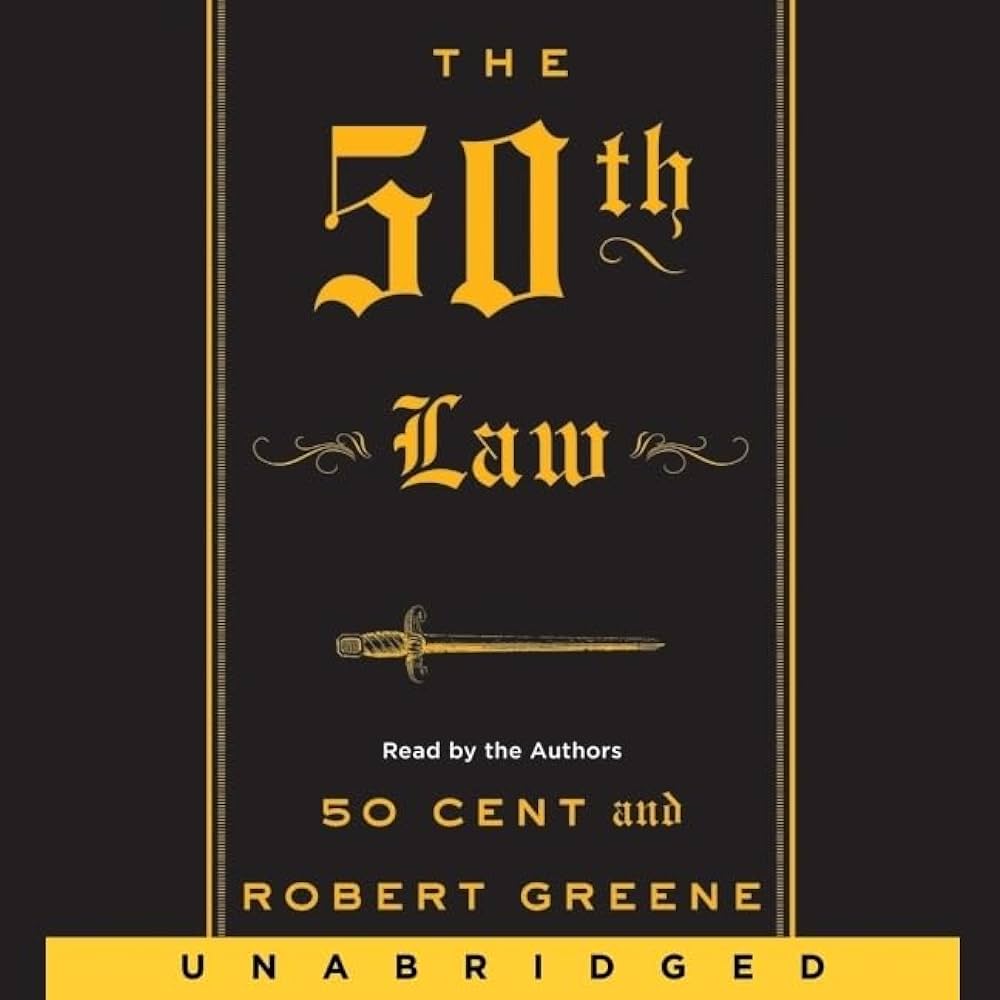
I highly recommend checking out the audible version of “The 50th Law” by 50 Cent & Robert Greene. Also, change the narration read to 1.2x for the best experience.

Cancel Culture

Anyone with a Social Media account has seen someone get “canceled.”

Usually, it’s a public figure who gets caught doing something bad, resulting in hordes of angry people online. Initially, these vigilantes were fair and just (they only targeted the worst of the worst), but after they got a taste of their newfound power, a dangerous culture began.

People started to go on Social media and patrol the streets. Some were tasked with scanning new posts for potential offense, while others were instructed to review people’s social media history to see if any dirt could be found on an old post they made. If someone’s had a Twitter account since 2009, that means looking through all their tweets to see if, somewhere along the way, they posted something that could be used against them.

If any incriminating evidence was found, it was brought to the public’s attention, and the person’s trial began online immediately. Anyone with a social media account was welcome to take part in the jury. To streamline the process, it was decided to ignore any context surrounding the transgression and completely remove the statute of limitations. Why the crime was committed or how long ago it was is irrelevant. All that matters is the person made a mistake, and now it’s time for them to pay for it.

Once the court begins, jurors are advised to review the case quickly and post their verdicts in the comment section. Why the rush? Every day, a new person is caught violating the moral law, and there’s no time for a thorough investigation when there’s a never-ending list of people who also need to see the judge for their offenses.

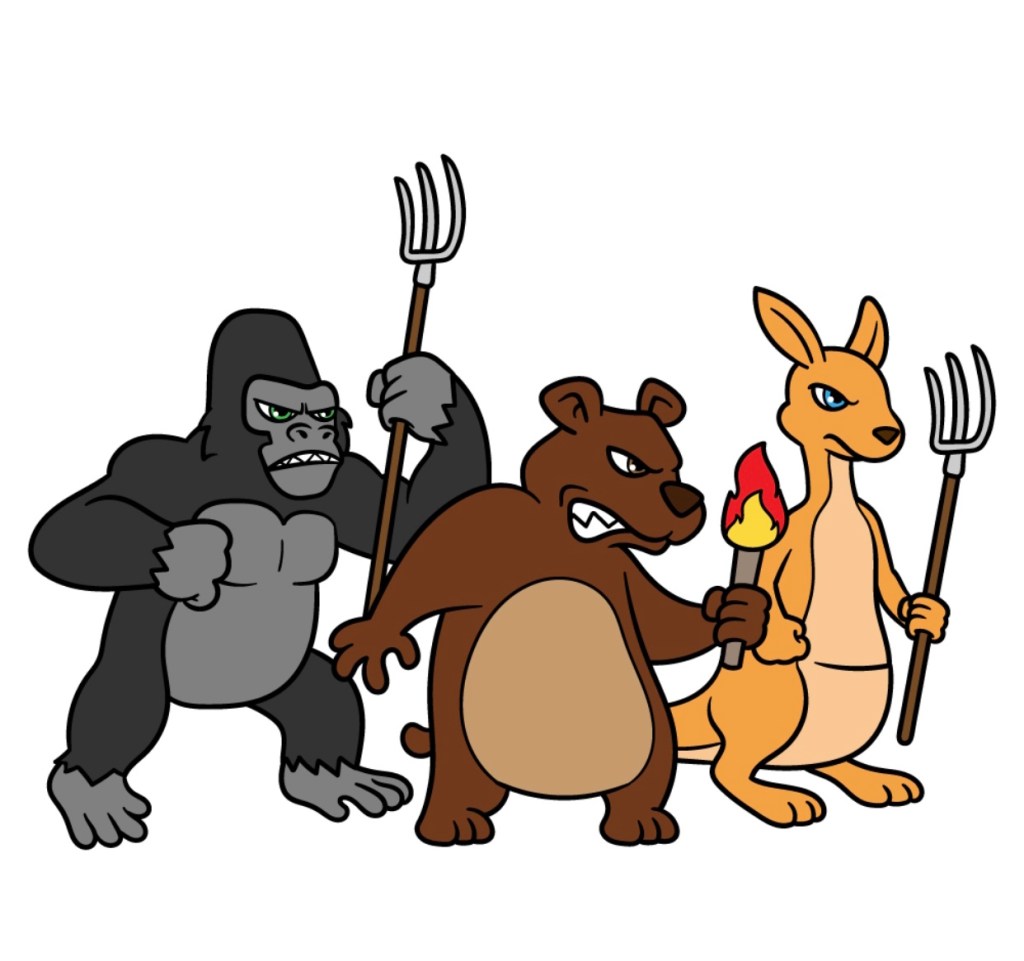
If it’s determined that the person is guilty, orders are given to withdraw all public support. If they’re an actor, that means no longer watching their movies; if they’re a musician, it means no longer streaming their music, and so on. In the event a regular person gets busted, an investigation begins to determine where they work. Once that’s discovered, the company’s information is posted online, so people can harass them until their employment is terminated. After that person’s life and reputation have been destroyed, the group gathers their pitchforks & torches and starts searching for the next person to cancel.

Members of Cancel Culture work 365 days a year, rotate morning and evening shifts, and are willing to work on holidays without bonus pay. They have an obligation to society and will stop at nothing to make sure every sinner faces their judgment.

I was aware of “Cancel Culture” before it formally got its name, but this was the first year I started paying attention to it. My interest was piqued after I began using Twitter more frequently and noticed that every day, people were rallying together to “Cancel” somebody. Sometimes, the attack felt justified because the offense was so bad, and other times, it seemed like people just got offended when someone had a different opinion.

Regardless of what happened, though, one thing was clear – the reaction was always extreme.

The only positive thing I noticed about “Cancel Culture” is that it doesn’t discriminate against anybody. The people involved in it don’t care what color your skin is, how old you are, or who you’re voting for come election time. I knew nobody was safe when I went online and saw people trying to cancel Tony Robbins. If they’re willing to go after the king of positivity, we’re all fucked.

You could be in the

  • Lower Class
  • Middle Class
  • Upper Class
  • or even part of the Elite

Everyone’s fair game, and no one’s off-limits.

Now, I understand people have to be held accountable for their actions. On the surface, it does seem like the individuals getting canceled deserve what’s coming to them. It’s hard to feel bad for people who get caught in these deplorable acts. The problem is that an unfair system has now been created, and there’s no possible recourse for the person in error. People who participate in “Cancel Culture” just want them exiled from society and work aggressively to make their lives a living hell.

People are ruthless online because they have no connection to the person they’re attacking. If a family member or friend were caught in a blunder, they would never be so quick to condemn them. People don’t have the same compassion for a stranger as they do for someone they care about, though. They’re also going to be more fierce with their judgment when they can hide behind their private social media accounts or separate anonymous ones.

These online Avengers come off like they’re fighting for a good cause, but they’re really using vulnerable people as scapegoats for their own pent-up frustrations in life. It provides them with a sense of relief when they group up online and attack defenseless people. Social Media has created a new form of therapy called “Kicking People When They’re Down,” and many people participate in it.

I’ll occasionally scroll through the comment section when someone’s getting canceled and look at the profiles of people leaving mean comments. It’s always funny when you go to their page and see positive quotes like “Be kind to others” or “Forgiveness is Key.” You know they probably felt great when they posted it and racked up likes, but when it came time to apply the message, that same energy was nowhere to be found.

It’s ironic because everyone has done or said something that could get them “canceled.” We all have dark secrets that could get us in trouble if brought to the public’s attention. Even if you scanned someone’s entire life and couldn’t find something to use against them, I guarantee you that if a transcript were made that contained every thought that crossed their mind, they would get fired from their job, arrested, and possibly given a life or death sentence.

Nobody wants to admit this, but we all know it’s true.

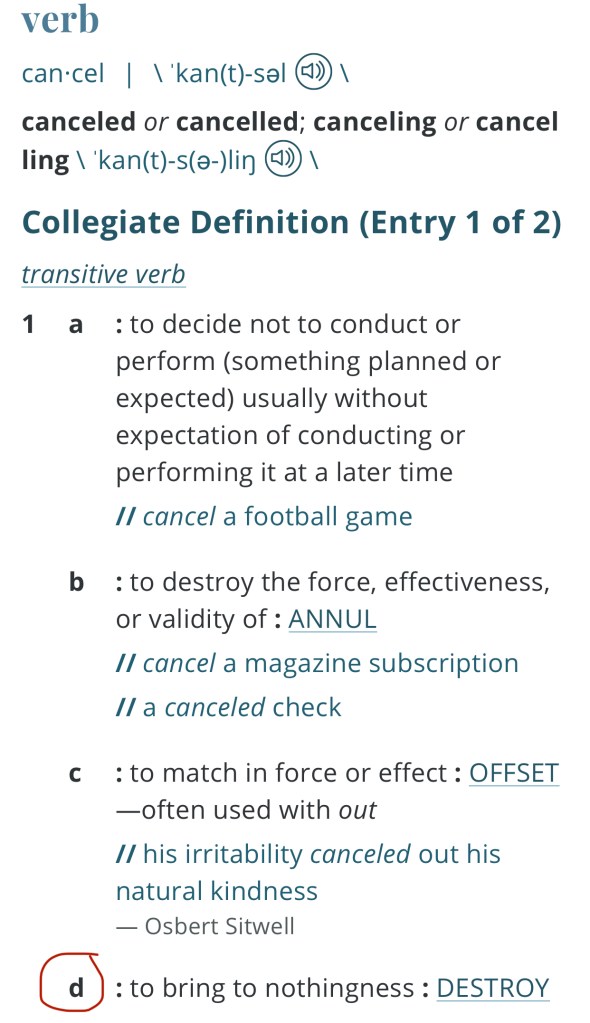
When people mess up, you don’t just cancel them and take away their ability to make a living. That just puts them in a desperate mental state where they might commit suicide or do other things that make them a burden to the world. Not to mention, some people have a family that depends on them. With that being said, though, you really see how ridiculous canceling someone is when you look at the definition of cancel.

I don’t know about you, but bringing someone to nothingness and destroying them sounds a little overboard to me. People can evolve over time, and giving up on them prematurely is a mistake. Some of the most revered people in history came from troubled backgrounds, and when we look back at our own lives, most of us likely had our biggest growth spurt after some sort of mishap. Taking a negative event and holding it over someone’s head for the rest of their life is straight-up cruel. Unless someone has done something terribly wicked and poses a danger to society, most people deserve a chance to redeem themselves.

Besides people’s lives being at stake, we’re also seeing freedom of speech in danger. There’s a saying, “There’s freedom of speech but not freedom of consequence,” and that’s never been truer than today. Anyone caught saying something that isn’t 100% politically correct is immediately attacked by waves of people online. They’ll even twist your words to make you look like a villain.

For example

  • If you’re an artist and write a song about a bad experience you had with a woman, they’ll label you a “Misogynist.”
  • If they find an old tweet where you called something retarded they’ll accuse you of making fun of people with disabilities.

They’ll create a compelling narrative and try to persuade people to believe their interpretation of events.

If you legitimately mess up and decide to apologize, they’ll say you’re only doing so because you got caught, and if you ignore them, it means you’re guilty. No matter how you respond, you can’t win.

Everything that happens online also has an impact on the real world.

Obviously, every corporation wants a perfect reputation, so they usually cave to online pressure and disassociate themselves from the person receiving bad publicity. If a CEO is under fire, you can expect them to resign shortly after the controversy breaks. If it’s an athlete or musician, you can bet their sponsors will drop them until the controversy blows over.

Very rarely will a company stand behind someone going through a public storm.

As a result of our society’s increased sensitivity, people have to think twice before saying what’s on their mind. You have to consider whether expressing your opinion or creating controversial art is worth all the blowback you’ll get. It’s unfortunate because most of the things that need to be said make people uncomfortable—making people uncomfortable in today’s world, though, can result in a loss of work, friends, and future opportunities. It’s sad to say, but these individuals wield extraordinary power online, and they can significantly alter your life if they perceive you as stepping out of line.

People have always been judgmental, but now they have a new and effective medium to do it on (Social Media). It’s scary to think we now live in a world where you can’t make mistakes or voice your opinion without people trying to ostracize you. There’s never been a time in history when people have been under more pressure to craft a perfect façade and maintain it at all costs. Individuality is getting lost as people conceal their true identity so they’re not the next person kicked off the raft.

Everyone’s morphing into the same white sheep, trying to avoid standing out and drawing attention.

To be frank, I don’t see Cancel Culture ending anytime soon. I will say, though, I’ve noticed people start to push back on the concept of “Cancel Culture.” It felt like the movement went unchecked for a while, but now, people are starting to get tired of it. Controversy can be entertaining every now & then, but when there’s a new scandal every day, it gets tiring. Even when someone dies, people go to the comment section and remind those mourning what the deceased person did while they were alive.

It’s strange that we now have an army of people online who feel they have the authority to dictate what’s acceptable & what’s not, who gets a second chance & who doesn’t, and it puts a real fear in people that what they do/say/create might result in them getting canceled. It’s really a form of bullying, and the whole movement should be recognized as a threat to humanity.

Whether it’s the fact that they don’t allow people to redeem themselves or the constant outrage over trivial matters, this new form of online policing is a hazard to all of us, and we should start taking it very seriously.

Make a one-time donation

Choose an amount

$5.00
$15.00
$100.00

Or enter a custom amount

$

Your contribution is appreciated.

Donate

The Hardest 10 Years

Original Post Date – December 2019

As we close out this decade, I’ve been reflecting on the past ten years of my life. Mainly, how it went vs how I wished it did. In this blog post, I’m going to share a life-altering experience that shaped how 2010-2020 went for me.

The story begins in the second semester of my senior year of high school, just a few months before I was scheduled to graduate. I had attended Home School for the last year or so, but returned to my local high school to get my diploma on stage. When I arrived at my high school, though, I was behind on the credits needed to graduate. To catch up, I had to take six different classes at my high school, a couple of adult classes at night, and a few courses at my local community college.

Most seniors only have a few classes and leave school early, but since I was so behind, I was at school from morning to night, and I also attended a community college on the weekends. I don’t remember exactly what my grades were, but from what I recall, I was failing nearly all of my classes. There were only a few months left before the semester ended, and I knew deep down I wasn’t going to graduate.

At this point in my life, I was also at the peak of my misbehavior. I was drinking, using drugs, and getting arrested on a regular basis. I was causing a lot of problems for my family, but I felt no remorse and made a conscious decision to live how I wanted. One night, though, after years of looking down at me in disgust, God decided it was time for me to learn my lesson.

My fate was set in stone, and on Saturday, April 3rd, 2010, my life was changed forever.

I woke up that Saturday and met up with my friends to smoke weed & drink. We hung out all afternoon and had plans to attend a party later that evening. When it was time for the party to start, we headed over and partied until the police came to break it up. As soon as the cops arrived, I started walking to the front of the house to meet up with my friends and go home.

Once I reached the front yard, I stood for a moment and observed the chaos. There were fights, people scrambling to get to their cars, police sirens, and everything you’d expect from a high school party. I was pretty wasted at this point and trying to make sense of all the commotion.

While all this was happening, one of my female friends asked to borrow my phone so she could call her boyfriend because she couldn’t find him. I gave her my phone, and she ran off to look for him. Meanwhile, I got into a scuffle with someone out front and forgot about my phone. Shortly after my altercation, someone else walked towards me with something in their hand, and I pushed them and swung at them.

One of my friends rushed over and pulled me away. Then, another one of my friends grabbed me and told me to come with him. We walked into the house where the party was held, and he told me that this girl said I hit her. I couldn’t believe it, and I told him that my last interaction with her was when I gave her my phone.

My friend told me he didn’t know what happened and informed me that people were looking for me outside. I told him I would go address the situation, but he told me “No” and blocked me from leaving the house. We stayed inside till things calmed down, and eventually, somebody gave me a ride home.

I woke up the next day feeling confused about the night before. Then, my cousin came to my room and told me that one of my friends was at the door and wanted to talk to me. I got out of bed and went to the front, where one of my best friends, who was ironically named Daniel, was waiting for me. He asked me what happened and told me this girl said I hit her. I told him it wasn’t true, and on top of that, she ran off with my phone and stole it from me.

While we were talking, I started to wonder how Daniel got to my house because he didn’t have a car at the time. It was strange for him to show up uninvited like this, and something didn’t feel right. We kept talking, and he told me that her boyfriend wanted to fight me and then asked what I wanted to do.

I thought about it briefly and told Daniel I would have to fight him. It was unfortunate because I thought her boyfriend was a cool guy, but there was no other alternative. Daniel assured me the fight would be fair and said he’d have my back if anyone tried to jump in. It sounded like a good plan, so I told him to wait while I put my shoes on and got ready.

At the time, I lived across the street from a middle school and told Daniel to have the guy meet me there to fight. As we walked, Daniel tossed me a lighter and told me to put it inside my fists and use it to strengthen my punches. Once we got to the school, I hopped over the fence, and as soon as I landed, I realized I was about to get my ass beat. I felt super hungover from the night before and wasn’t in any condition to fight.

I started walking across the playground and saw the guy I was supposed to scrap with. Eventually, we met face-to-face and began trading punches, but while fighting him, I felt someone else hit me in the back of my head. I stumbled back and saw a few people charging at me with their fists.

I looked at my friend Daniel with a facial expression that said, “Yo, I’m getting jumped. I need help,” and he just stared blankly at the ground. I realized at that moment—he had set me up. Then I got knocked on the ground and kicked a few times before Daniel said, “That’s enough,” and they stopped their attack and walked to a getaway car.

I stood there, bloodied up, for a few seconds and had a moment of clarity. It’s almost as if when they kicked me on the ground, some of my brain cells got moved back into place, and for the first time, I realized I had to change. I had turned into a low life scum bag and knew I couldn’t keep living like this. I still didn’t understand what happened the night before, but I knew this had to be a sign of some sort.

I walked back to my house and decided I would quit using drugs & alcohol and drop out of school to get my life together. I knew that hard times were ahead of me, but I felt like it was the right decision.

I went to school shortly after this incident to return my books. On the way in, I ran into a group of girls I knew, and they started laughing at me. My spirits were way down, and I felt like such a fucking loser. Then I walked inside the main office, and the girl I had lent my phone to was standing right there. As soon as we locked eyes, she gave me the evilest smile I’ve ever seen. The grin on her face was from ear to ear.

The only thing I could compare it to is the Cheshire Cat from Alice in Wonderland. She didn’t say anything, but she didn’t have to; her smile basically said, “Look at what I did to your life.”

I finished returning my books and went home.

At this point, everyone I knew was talking shit about me. Rumors were spreading, and I suddenly became the laughingstock of my community. While all this was happening, my family also had to move out of our house because we could no longer afford to live there. In a short time span, my entire life “got flipped turned upside down” like Will Smith rapped in the Fresh Prince intro.

What made this situation even more challenging to deal with was that right when this happened, I quit using drugs and alcohol. I was already starting to slip into a deep depression over everything that happened, but that, combined with all the drugs leaving my system, made everything 10 times worse. Unfortunately, it took this event to motivate me to get sober, and now I had to get clean on the universe’s terms and not mine.

I had to deal with agonizing withdrawal symptoms because I quit everything cold turkey. I was in pain every day and had endless worries plaguing my mind. I could never fall asleep at night, and I started having seizures while lying down. My heart would beat fast, and my arm would randomly begin shaking. When I finally did fall asleep, I would have strange dreams that didn’t make sense.

My sleeping problem also affected me at work because I would show up feeling exhausted. During my breaks, I would sit outside and stare at the clouds, wondering how my life even got to this point.

As time passed, the reality of what happened began to sink in. If nobody calls you for a week or so, you might think nothing of it, but as years went by without anyone reaching out to me, I realized nobody cared about me anymore. I was looked at as that guy who hit a girl and dropped out of school after getting jumped. To add salt to injury, the kids who jumped me weren’t even in my grade. I was a senior, and they were 10th graders, which made it even more humiliating.

Since I no longer had any friends, I spent most of the next decade in isolation. I would try to make friends here and there, but I was so unsatisfied with my life that I was miserable everywhere I went. I spent most of my time at home reading, writing, and making music. I remember one time, I got in a fight with one of my family members who called me “A wannabe rapper with no friends.” I did want to be a rapper, so I didn’t take offense to that part, but boy, did it hurt when she said I didn’t have friends because the truth was, at that point, I didn’t have any.

I felt hopeless and had never experienced this kind of failure before. My whole life changed, and it felt like I died and no longer existed.

I was in so much pain, I thought about killing myself to end my misery. The isolation drove me insane, and I started to feel like I was going crazy. My mind was pushed to the absolute limit, and I felt defeated. I knew my family would be devastated if I killed myself, though, and I couldn’t bring that kind of sadness upon them—especially my grandmother, who I loved more than anything.

The isolation did give me time to reflect on my life, though. When you’re alone by yourself, there’s nothing to do but think about the choices you’ve made. I spent many nights lying in bed thinking about my life, and through introspection, I found myself.

Eventually, I decided to move forward and stop drowning in my sorrows. While it’s understandable for someone to feel sad during a rough season, you have to move on with your life after a certain point. I realized I had spent too much time feeling sorry for myself, and it was time to end my pity party.

Awkwardly enough, one day I ran into the guy who had set me up to get jumped at Target. I said “wassup” to him and wished him the best—not because I’m self-righteous, but because I’ve lost so much time that I can’t afford to walk around bitter anymore. I also ran into the girl I accidentally hit. She worked at a gym I went to. When I ran into her, I was still confused about what happened, so I didn’t say anything.

I found out what really happened years later. I didn’t know she was trying to return my phone until a mutual acquaintance told me. I always thought she stole my phone and made up the story of me attacking her. Once I found out, I went back to the gym to apologize to her in person. She didn’t work there anymore, though, so I reached out to her on Social Media, and she accepted my apology.

When I see her in person, I’ll definitely apologize face to face, but for now, that will have to suffice.

I really wish I could end this on a positive note, but I have to go off on a tangent on how, during the hardest time of my life, every one of my friends turned their back on me. I could’ve bought a 500-page Where’s Waldo book, took off my glasses, and found Waldo on each page quicker than I could’ve found any of my friends throughout this catastrophe.

When I was going through all this, it made me think about 2Pac’s famous prison interview where he says, “Fear is Stronger Than Love,” which he got from philosopher Niccolo Machiavelli.

His quote reads,

Upon this a question arises: whether it be better to be loved than feared or feared than loved? It may be answered that one should wish to be both, but, because it is difficult to unite them in one person, it is much safer to be feared than loved, when, of the two, either must be dispensed with. Because this is to be asserted in general of men, that they are ungrateful, fickle, false, cowardly, covetous, and as long as you succeed, they are yours entirely; they will offer you their blood, property, life, and children, as is said above, when the need is far distant but when it approaches they turn against you”

As I reflected on the turn of events in my life, I began to understand what 2pac and Machiavelli meant when they said, “Fear Is Stronger Than Love.” I thought about all the times I hung out with my friends, and they told me they would always have my back, but when I found myself in this improbable situation, all that went out the window, and they betrayed me.

Most of my friends just stopped calling me. Some would act cool when they encountered me in 1 on 1 situations, but I’d find out later they were talking shit about me when hanging out with others. It was so unsettling, and I had no idea who I could trust anymore. I even had one situation where I was hanging out with someone, and they denied knowing me. Someone asked my friend who they were hanging out with on the phone, and my friend said Daniel. The person on the phone said, “Najar?” and my friend replied, “Naw, why would I be with him?”

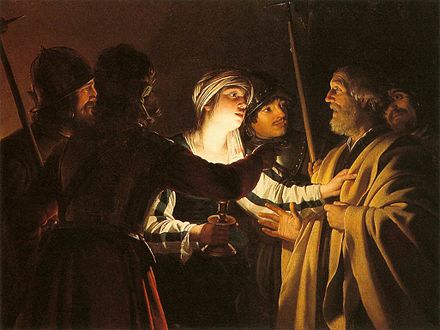
Now, I’m the furthest thing from Jesus Christ, but at that moment, it reminded me of the Bible story where Jesus gets arrested, and a girl calls out his disciple Peter for being a follower of Christ. Then Peter denies knowing him to avoid getting in trouble. Well, here, my so-called “friend” was doing the same thing and acting like he wasn’t with me when I was standing right there in front of him.

I went home that day feeling so hurt, and you know what’s ironic about this second situation involving one of my friends? The guy I was hanging out with was named Jesus (Hay-Zus).

God, you have a sick sense of humor.

This whole experience was beyond harsh, and it showed me that even though I thought I had a lot of friends, I was ultimately all alone in this world. The intensity of this crisis made me fully understand my mortality, and I saw how anybody (even your closest friends) could change on you in a bad situation. You can get a master’s degree in psychology, but nothing will teach you more about human nature than running into a situation where your social standing is damaged, and it becomes dangerous to be associated with you.

With that being said, though, I have to take responsibility for my actions. Everything that happened could’ve been avoided, and this whole fiasco was my fault for a couple of reasons.

  1. I was at a party my parents didn’t give me permission to go to
  2. I was out past my curfew
  3. I was drinking alcohol when I was well under the legal drinking age
  4. I was drunk & high off pills

In this story, I’m the villain, and had I not done those things, I would’ve never ended up in this position.

Sometimes, I do wonder how my life would’ve turned out had I told this girl “No” when she asked to borrow my phone. Or what if I left my phone at home that day, or my battery died that evening? Chances are, I would’ve continued on the dark path I was on. I know if this hadn’t happened, I would’ve likely ended up in a worse situation down the line. To help myself cope with this traumatic experience, I tell myself it was just my fate and something that was “meant to be.”

When I think about what I went through, I realize most people will never experience an event like this. You might log onto Social Media and see a Public Figure going through a crisis, but the likelihood of that happening to you is slim to none. Regardless, I want you to learn from my experience.
My advice is as follows. Never do anything you know is wrong or change who you are to gain the approval of others. I sold my soul to the devil so I could become more popular, but the money Satan bought it with was fake. I’ll admit that I did feel cool for a while, but ultimately, it wasn’t worth it. My thirst for validation resulted in me making one bad decision after the next until, eventually, my luck ran out, and I got into a situation that nobody could save me from. My biggest regret in life is deviating from my authentic self to fit in with people who just forsake me in the end.

I also feel terrible for the pain and stress I inflicted on my family. Now that I see my family members growing older, I’m starting to appreciate them more than I did when I was growing up. They always worked hard and did their best to take care of me, and I disobeyed them for years because I wanted to fit in with the popular crowd. It really hurts because none of the people I disrespected them for even bothered to call me or invite me to hang out once over the course of a decade.

This experience taught me many priceless lessons, lessons that may even take me to great heights one day, but despite that, I can’t help but feel sad when I think about how things could’ve went. I could’ve graduated from high school on stage, gone to college & partied with friends, had a girlfriend, or partook in any of the other things young people go through. Instead, I spent just about every week & weekend from 2010 to 2020 (from when I was 17 to almost 30) alone by myself with nobody to talk to or hang out with.

These were easily the worst years of my life, and I can’t even begin to explain how lonely and depressed I felt during this time period. I don’t even know how there’s water left in my eyes after all the nights I spent crying myself to sleep.

I also realized that all throughout my 20s, I was stuck reliving the same memories from my childhood & teenage years because I never went out and had new experiences. It’s really depressing when you think about it, and I’m filled with an overwhelming sense of regret because I didn’t get a chance to live and experience life. It’s something I feel more and more down about as time progresses because, as you get older, you start to understand the value of time, and I’ve lost an unbelievable amount of it.

What’s done is done, though, and I have to make the best out of the rest of my life. Things have gotten a lot better in the past few years, and I’ve made a lot of progress. I still have a long way to go, but at least I’m back on my feet and headed in the right direction. Unfortunately, I had to destroy my life to become the man I always was, but that’s what it took, and now I’m ready to come back reborn.

Here’s to a better decade.

Make a one-time donation

Choose an amount

$5.00
$15.00
$100.00

Or enter a custom amount

$

Your contribution is appreciated.

Donate

My Experience with Drugs & Alcohol

I can vividly remember the first time I got high. I was a teenager hanging out at my friend’s house. My friend was an avid pot smoker and had an intriguing strain of weed called “God’s Gift.” We were looking for a place to smoke, and since my Mom and Stepdad were gone for the weekend, we decided to go to my house. Once we got there, we climbed on the roof and started smoking some weed my friend had in a green container. We smoked out of a soda can since none of us had a pipe, and after I took my first hit, I began coughing like a maniac, unsure of what to expect in the coming moments.

After I stopped coughing, I slowly began to feel a change in my body. Everything slowed down and seemed ten times funnier. My friends and I then decided to walk to the restaurant Islands to get some food. We stopped quickly at a grocery store, where one of my friends asked if I had any money. I put my hands in my pockets and pulled out everything I had, which amounted to a few coins, and my friend yelled out, “We’re rich,” and we all started laughing hysterically, high out of our minds.

Once we left the market, we walked to the restaurant Islands and got seated by a waitress. When she asked if we wanted anything to drink, I ordered an Iced Tea. She clarified and asked if I wanted some sort of fruity flavor, which made me laugh because of how funny it sounded. Thankfully, I was able to compose myself and finish giving my order. We had a good time eating at the restaurant, and I spent the remainder of the night in a relaxed state.

I really enjoyed my first time smoking weed and getting high.

After my first smoke session, I started smoking weed on a regular basis. Especially once I switched to home school in the 10th grade. It was pretty easy for me to buy weed and hide it from my family… At least, at first. I hid my weed in a special compartment in the bathroom that went undetected for a long time. I would smoke during the day when no one was home, or I would go over to my friend’s house and get high. Once my family retired for the night around 9 or 10 PM, I would go outside and walk down the street, then smoke on the corner behind a giant RV trailer.

Eventually, I was introduced to alcohol and cigarettes one night at a friend’s house. I can’t recall what I drank, but I alternated between beer and hard liquor. I also had my first cigarette that night, which was a Marlboro Light. I really enjoyed puffing on tobacco as I drank throughout the evening. I threw up at the end of the night, but I still had a great time drinking.

After that incident, I started going out with my friends regularly to party. We usually got two 30-packs of beer and drank on the weekend. As I got older, I began drinking hard liquor, but I initially started off drinking beer and only had the harder stuff when it happened to be around. Most of the time, we could get an older friend to buy alcohol for us, but if not, we knew places that would sell to underage kids.

If, for some reason, we weren’t able to buy alcohol, we’d do what’s called a beer run. A beer run works like this: two people enter the market, one looks out and makes sure the coast is clear, and the other grabs the alcohol and bolts out of the store. On one particular night, it was my turn to be the guy who stole the alcohol, so one of my friends stayed in the getaway car while my other friend & I went into the store to steal some beer and get the party started.

Once we got into the store, my friend walked around the beer aisle to make sure there was no security. I went to the aisle where all the liquor was and waited for my friend to text me that it was safe to run out. When he texted me to go, I grabbed a 30-pack of beer and started bolting outside full speed. As soon as I took one step outside, though, I was immediately tackled by two huge guys who were secret shoppers (security guards dressed like civilians).

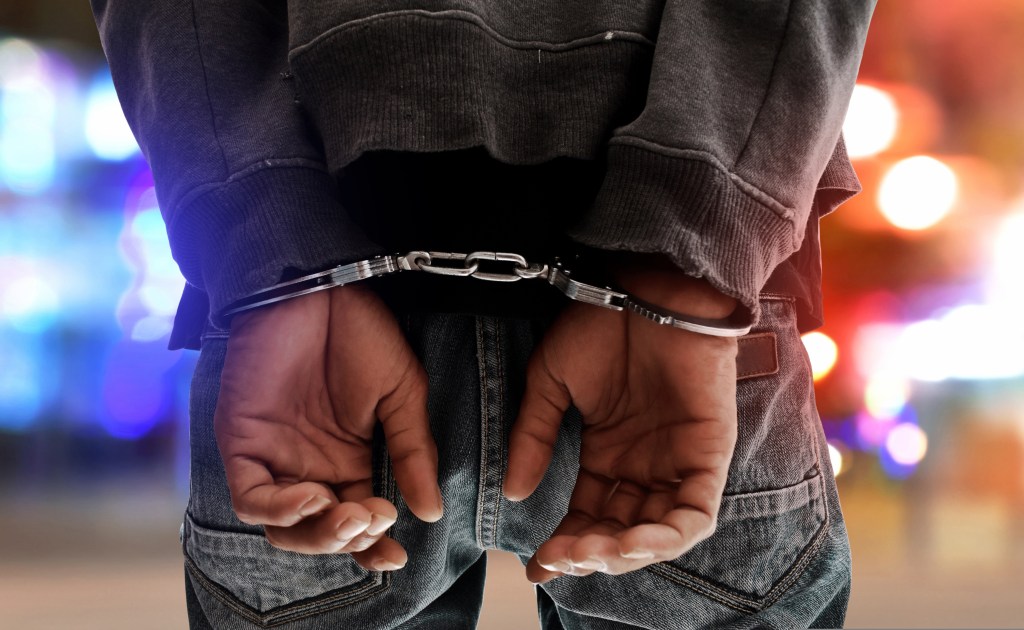
They put me in handcuffs and escorted me to a holding room in the back of the store. Everyone who was shopping gave the secret shoppers a round of applause for capturing me, which was pretty embarrassing. Once we got to the backroom, the cops asked me for my parent’s phone number. I gave the cop my aunt’s phone number, hoping she could pick me up and not tell my Dad about it. That was a fantasy, and when they called my aunt, she gave them my Dad’s phone number.

I had lied to my Dad about where I was going earlier, so I knew I was in big trouble.

The cops then contacted my father and asked him to pick me up. My Dad let them know he would head over right away.

As I patiently waited for my Dad to arrive, all sorts of fears came over me. How hard would he hit me once we got home, and how long would I be grounded? I could only imagine and knew I was in big trouble. There was no way I could explain to my Dad why I was caught running out of the store with a case of beer. I was caught red-handed doing something illegal and had come to terms with the consequences, whatever they might be.

Eventually, I heard footsteps coming up the stairs as my Dad entered the back room. As soon as he walked in, he looked at me with disgust. The officer explained to my Dad what had happened and wrote me a ticket for shoplifting. My handcuffs were taken off, but before I was released, the police realized they had forgotten to search me. They asked me to empty my pockets and began patting me down.

To my surprise, there was a pack of cigarettes in the jacket I was wearing. Ironically, it wasn’t even my coat or cigarettes – my friend let me borrow his jacket earlier in the day because it was raining, but that didn’t matter and made my situation worse. I had just been caught stealing alcohol, and now I had a pack of smokes on me. The officer immediately wrote me an additional ticket for being under 18 and possessing tobacco.

My Dad and I started walking to his truck when they finally released me. I knew he was probably going to yell at me or hit me once we got in. Thankfully, he just started yelling, and after what seemed like forever, he stopped, got out of his truck, and walked forward until he disappeared into the darkness of the night.

I got out of his truck and called my friends to pick me up since I didn’t want to go home and deal with my Dad’s wrath. As soon as they picked me up, we talked about the failed attempt and the disappointment of me getting caught, even though I was the only one who had to deal with the consequences.

We decided to make the most of the night and went out to party. Before we did that, though, we stopped at a nearby 7-Eleven to buy another pack of cigarettes (to replace the ones the police took). We then partied for the rest of the night. I stayed at my friend’s house for the weekend because I was too scared to go back home.

I decided I would go back to my house on Sunday.

The next day, I woke up and hung out with my friends. Later that night, we went to another party. This time, we were outside waiting for it to start, and some guys dressed in regular clothes walked up to us and said, “Undercover cop, get against the wall!” They began performing a search on me and found a pack of cigarettes, and I was given another ticket for underage tobacco possession. Thankfully, they didn’t call my Dad or arrest me, but I still got another ticket I’d eventually have to deal with.

I started getting into trouble when I began developing a social life and went out partying on the weekends. My family always told me I couldn’t go out, but I disobeyed them and went out anyway.

To fund my vices, I worked as an assistant janitor for my stepdad and as a data entry clerk for my aunt’s husband’s doctor’s office. Since I was young and didn’t have bills, I had a lot of money at my disposal during my teenage years. If there were ever a lull in work, and I needed more money. I would ask my family for cash. If they were generous enough to help me, I would take advantage of them.

For example, my aunt would give me her card to withdraw $20 at an ATM, and I would take out $40. I’d ask my Grandma, who received Social Security once a month, to let me borrow money that I knew I’d never pay back. There were also times I stole my Dad’s stuff and sold it for drug money. It feels terrible sitting here writing that, but those were the types of things I’d do to fund my lifestyle.

At some point, I was introduced to pills. The first one I recall taking was ecstasy. 

Ecstasy is a pill that comes in various colors & designs and makes you feel extremely happy. It puts your mind in a state of bliss and makes everything more enjoyable. Music sounds better, conversations seem deeper, and you appreciate everything around you. You do experience a hard crash the next day, but for those hours you’re high, there’s no comparable feeling. 

The first time I used ecstasy, I was hanging out with a friend who had a couple of yellow ecstasy pills with a Lamborghini on them. I took one and swallowed it, not sure what to expect. My friend and I randomly got into an argument about 30 minutes after I took it. While I was yelling at him, all of a sudden, I felt my anger disappear. I stopped arguing with my friend and felt a surge of joy enter my body. I apologized to my friend for getting mad and told him he meant a lot to me.

I could feel the ecstasy starting to kick in, and boy, did it feel good.

The friend I was hanging out with had to leave and go somewhere, so I called another friend who lived nearby, and he invited me to come over and hang out. He didn’t live far from where I was, so I walked over to his house. It was a sunny day, and I felt like a million bucks as I walked with the warm sun shining on my skin.

When I arrived at my friend’s house, I let everyone know I had taken ecstasy for the first time. They asked me how I felt, and I told them, “amazing.” They made sure I was nice and comfortable and were extra accommodating to me. They pulled out some weed to smoke, and we blazed outside for a bit. I asked my friends if they had cigarettes, and one of them slowly pulled out a pack of Marlboros 27s from his jeans, which were my favorite cigarettes at the time.

I had a huge grin on my face when my friend handed me the cigarette, and it felt so good to have a smoke while I was high off ecstasy & marijuana. As soon as I finished it, I requested another one and started chain-smoking.

After we hung out for a while, we decided to get in my friend’s car and drive around. As soon as we got in the car, the radio started playing, and ‘Toxicity’ by System Of A Down came on and took my high to a whole other level. My friends were hungry, so we drove through ‘Carl’s Jr,’ and one of my friends suggested I get an orange juice, which he said was the best drink to have when you’re on ecstasy. I took his advice and ordered an orange juice, which tasted like heaven going down my throat.

I was having the time of my life, and I spent the rest of the day chilling with my friends.

Following that day, I began using ecstasy more frequently, and at one point, I went on a binge, where I took ten pills in one day. It’s absolutely ridiculous, but I’ll explain what happened. One day, my friend came over and informed me that he had stolen a bottle of ecstasy pills from his brother, who was a drug dealer at the time. We decided to go to the mall and spent the whole day walking around popping pills. It was the Christmas season, so the mall had bright lights throughout the shopping center, and they played classic Christmas songs, like “The Nutcracker” over the loudspeakers.

Every hour or so throughout the day, we popped another pill to keep our high going. Whenever we started to feel dehydrated, we bought water from the food court. It felt like we were at a rave, and we had a blast just strolling around.

By the end of the day, we were drained from all the drug use and crashed at my house. The next day, we got up, and my friend left to go home. Shortly after, my family approached me with a small bag of Ecstasy and Xanax pills. I guess while my friend was sleeping, his drugs fell out of his pants, and my family discovered the drugs on our living room floor.

I told them the drugs weren’t mine, but it was a tough story to sell. They ended up giving it to my Mom, who took it to a police station, where they tested it and informed my Mom of the type of drugs they were. My family wasn’t happy with me, and it was a bad look. On top of that, I felt drained from all the ecstasy pills I had taken days prior at the mall.

I reached out to my sister and asked her to take me to the hospital because I felt like something was wrong with me. I asked her to keep it confidential, and she agreed she wouldn’t tell anyone. She then took me to the hospital, where the doctors examined me and said I’d be fine. They just told me to drink a lot of water and stay hydrated, then sent us on our way.

When my sister dropped me off at home, she immediately told my family what happened. I felt betrayed that she told my parents after I confided in her, but looking back now, I understand why she was worried. Unfortunately, it put a significant strain on our relationship at the time, and we didn’t speak for nearly a decade. We still don’t have the closest relationship, but I’m no longer mad at her, and we’ve been communicating more frequently than in the past.

Regardless of this incident, I continued with my drug use. I also became a full-time cigarette smoker. Before, I smoked cigarettes occasionally, but eventually, I got hooked and started buying my own packs. There was a Tobacco Shop near my house that one of my underage friends bought from, so I walked there hoping to buy cigarettes for myself without any problems.

The first time I went to the store, I walked up to the counter nonchalantly and confidently asked for a pack of cigarettes as if I were well over 18 and wouldn’t need to show any ID. I must have been in over my head cause the first thing the guy at the counter said was, “ID, please.” I couldn’t provide it, so I walked home empty-handed and disappointed.

A week or so later, I was craving cigarettes, so I marched back to the store, hoping to get a different result. The same guy was there from the first time. I asked for cigarettes, and once again, I was denied. I mentioned that one of my friends bought cigarettes there, and I wanted a pack for myself. The guy looked at me carefully and thought to himself for a second. He then told me to go across the street to Taco Bell and get him some food, and once I came back, he would sell me a pack of cigarettes. 

I was happy to oblige and pick him up some tacos, and right then, I made a connection with someone who would sell me tobacco products.

My favorite cigarettes were Marlboro 27s & Reds. I also smoked Wine Black and Milds. When I look back at everything I’ve used, from drugs to liquor, I have to say I enjoyed cigarettes more than anything. Having 20 tobacco sticks to enjoy throughout the day or a long wine, black and mild, to puff on always relaxed me, and I loved smoking tobacco even though I knew it was terrible for me.

One of the main differences between drugs and tobacco is that it’s much easier to hide a drug habit than a cigarette habit. When I was high on drugs, I could just sit quietly in the car with my headphones on and tell my family I wasn’t feeling good and avoid blowing my cover. When you smoke cigarettes, though, you can’t hide it because it leaves you with a strong smell that’s hard to get rid of.

I remember one time my Mom picked me up to take me to court for a ticket I had. Before she got to my house, I went outside for a quick smoke. When she arrived, I got in her car, and she immediately called me out because I smelled like cigarettes. I denied smoking, but obviously, I was, and I smelled like I just walked off a tobacco farm.

At this point in my life, I was regularly drinking alcohol, smoking cigarettes & weed, and experimenting with harder drugs.

One night, my friends and I were outside my house around midnight after partying. While hanging out, I saw one of my friends pull out a pouch filled with white powder. My friend then started rolling up a dollar bill and began preparing a line of Cocaine to snort. I was both drunk and high and asked my friend to let me try some when he was done.

I felt nervous when it was my turn to do a line, but I moved forward with it, curious to try the infamous drug. After snorting the Coke I didn’t feel anything, but I was told to wait patiently until it kicked in. About ten minutes later, I felt a powerful high come over my body that felt sensational. I lit a cigarette and started taking drags from it, blowing smoke into the air of the night. It was a very pleasant feeling, and I enjoyed every second of it. It definitely lived up to the hype.

Cocaine is a highly addictive drug. It feels so good that you want more of it as soon as your highs over. It’s one of those drugs that causes people to act desperately to get their hands on it.

I remember one night, I went across the street to my neighbor’s house, and when I got back to my house, I couldn’t find the Cocaine I had in my pocket before leaving. I went back outside, certain I dropped it, and probably spent an hour on my hands and knees, using my phone as a flashlight, trying to locate the small bag of Cocaine I had.

I never ended up finding it, but when I think about this incident, I can’t believe how ridiculous I must have looked in the wee hours of the night trying to locate some cocaine on the ground. When you’re a drug user, sometimes you can’t see how crazy you’re acting.

Around the same time I started using Cocaine, my friends and I also started using promethazine. Most people just mix their syrup with soda, but my friends and I were such fiends that we poured it on everything. We dripped it over our cigarettes before we lit them, we poured it on our blunts & bowls of marijuana, and we took turns taking chugs straight from the bottle. It was never the primary drug we used, but we enjoyed it whenever we got our hands on a hard-to-find bottle.

After I spent some time experimenting with other drugs, I realized smoking weed no longer satisfied me. The high it gave me wasn’t strong enough anymore. I started to lose respect for weed and preferred to use harder drugs when I went out.

As underground rapper, Necro said in his song, ‘I Need Drugs.’

“As a young teen, I started with marijuana

Then graduated to Coke cuz I needed something stronger.”

Out of all the drugs I used, though, the worst one has to be a little white pill called ‘Xanax.’ It’s a prescription drug that’s typically given to people who have anxiety problems. It puts you in a really relaxed state and makes you lose control of yourself. When you take too many or mix it with alcohol, it can cause you to black out and not remember what happened the night before.

I started taking Xanax when I transitioned from home school back to regular school. One of my friends started selling Xanax, so I would meet up with him before school and buy two bars, which was the perfect dose if you wanted to stay high all day.

One time, I was high off Xanax with my friends, and we went to a 7-Eleven to buy some cigarettes and alcohol. When we walked in, my friend told me I jumped on the counter and asked the clerk if he enjoyed his job, and other random questions. The clerk must have been like, “What the hell’s wrong with this guy?” When you take these pills, though, you can’t control yourself because you’re way too loose, confident, and high.

I started getting comfortable using drugs at school and would even snort Cocaine in the bathroom stalls between my classes. I would sit on the toilet, take out my folder, do a line or two, and leave. I never got caught, but an adult approached me once and asked why my eyes were so big. I got nervous, and my heart sank. He walked into a nearby office, and I quickly left the area.

The same adult saw me another time and walked up to me again to scan my eyes, but this time, I wasn’t high, and my eyes looked normal, so he couldn’t say anything. I didn’t know it at the time, but looking back, these were warning signs that my drug use was apparent not only to my family but to people outside my household.

Eventually, I reached a point where I was high every day and lost sense of time. I had no idea what day or month it was because I was in a non-stop cycle of using drugs and partying. I completely stopped listening to my family and developed a careless lifestyle where I was only concerned with going out and getting high.

One day, I got home after a night of partying, and my Dad told me to pack my bags and get ready to go to my Mom’s house. He said my behavior was out of control, and I couldn’t stay with him anymore. Once he dropped me off at my Mom’s, I knocked on her door, and she opened it & called my Dad, and told him I couldn’t live with her and to come pick me back up – Right away.

I had turned into such a troubled teen that nobody wanted to deal with me anymore.

There were times I wanted to quit using drugs and get my life on track, but I was never able to stop using for more than a week or two. My friends and I always proclaimed we’d quit, but we all knew it would only last for so long. When you’re going out and partying in environments that contain drugs and liquor, it’s hard to abstain from them, especially when everyone else is indulging in them and having a good time.

Eventually, I got into so much trouble that I knew I had to sober up. I made the decision to immediately quit everything cold turkey. It was challenging, but I knew it was time to finally address my problem. I had let everyone around me down, and it was time to get clean.

Since my body was used to regularly consuming drugs and alcohol, my body reacted poorly to me quitting. I felt terrible throughout the day and had trouble falling asleep at night. When I finally fell asleep, I had strange dreams. Sometimes, I’d lie down and feel like I couldn’t breathe. My heart was beating so fast I thought I was going to have a heart attack. It also felt like I was having seizures because my arm would randomly shake from side to side.

One thing that helped alleviate my pain was hot showers. Having hot water poured all over my skin was surprisingly relieving. There were times I took three or four showers a day. My family would ask why I was taking so many showers, and it probably looked weird, but it made a man who felt insane feel sane, temporarily.

I was able to stay clean for a whole year, but like most addicts, I relapsed. My family had left town for the weekend, and I had some old friends come over. Sadly, within about 48 hours, I relapsed on cigarettes, alcohol, Cocaine, and weed. I re-entered the same type of environment I was in before, and due to my lack of self-control, I indulged in the same substances I swore I was done with.

After this incident, I didn’t use Cocaine again, but I ended up drinking and smoking off and on for a while.

One of the most embarrassing moments in my life came when my cousin and I went to a local Marijuana dispensary to pick up our daily supply of weed. I felt embarrassed walking in because I was wearing the same clothes I had on during my last visit. I also hadn’t showered in days and wasn’t taking care of myself. I felt like a complete and total bum.

When we got to the dispensary, I heard a noise coming from the ground. I looked down, and my shoelaces were untied, flapping against the ground. Here I was, a grown man who hadn’t showered or shaved in days, wearing the same outfit as the last time I came in, and not just one but both of my shoelaces were untied.

At that moment, I realized I was a huge mess.

I decided to cut down on my drinking, so I took a break for a few months. One night, though, I went over to a neighbor’s house and got offered some liquor. I thought to myself, since I hadn’t had a drink in a few months, I’d probably be able to control myself, and I convinced myself it’d be okay to have a drink.

I started drinking again, and for the first couple of times, I was able to drink until I was buzzed and then stopped like a responsible person. Unfortunately, this didn’t last long, and I went back to my old ways of drinking until I blacked out. I took another extended break and tried drinking again & the same thing happened. I controlled myself initially, but then went back to overdrinking.

At that point, it was clear I was an alcoholic.

When I turned 21, my family wanted to take me out to have drinks, but right before my birthday, I decided to quit drinking forever. Ironically, I quit drinking before I was legally able to start, but that’s how it worked out for me.

My last night of drug use also came when I was 20 years old. I was hanging out with a friend when he suddenly passed me a glass pipe. It didn’t look like the usual pipe I smoked weed out of, and looked strange. I figured there must have been cannabis oil in it and took a hit, and after a few moments, I felt the most powerful high come over my body. I asked my friend, “Yo, what kind of weed is this! I ain’t never been this high before”, and he replied, “Naw, this ain’t weed, bro. It’s Crystal Meth.”

I thought briefly to myself how I’d been clean from hard drugs for years, and now I relapsed on a drug that was far worse than anything I was using before. I felt terrible for a moment, but succumbed to smoking meth with my friend all night. I have to say, out of every drug I’ve used, Crystal Meth gave me the greatest high.

I left my friend’s house around 5:30 AM and started walking home. As I approached the front of my house, my uncle was in the kitchen making breakfast. He opened the door, looked at me, and said, “You’re on drugs,” in disgust. I walked to the bathroom and looked at myself in the mirror. My eyes were so dilated that it looked like they were about to pop out of their sockets. I went to lie down in bed and felt so disappointed in myself.

I may have used drugs a few times after this incident, but sometime before I turned 21, I decided to permanently quit taking drugs and haven’t relapsed since. I’m 30 years old now, so I’ve been clean for about a decade from drugs & alcohol. I’m fully aware now that I have an addictive personality and can’t afford to consume any of these substances again.

Quitting drugs has been easy for me, but quitting drinking has been a challenge because it’s such a big part of our society. Everywhere you go, it seems like people drink, and not everyone is understanding of your decision to be sober. Most people respect me when I mention I don’t drink, but if they press me on it, I just tell them I’m an alcoholic. That shuts everyone up instantly. It would be like a guy asking a girl on a date, and she tells him that she’s a lesbian.

There’s not much you can say after that.

I don’t party as much these days and prefer not to be at places where there’s drugs & alcohol. Not because I can’t control myself, but because it doesn’t make sense to put myself around things that previously helped destroy me. A thief shouldn’t hang out at a bank, a person with a porn addiction shouldn’t be on Pornhub, and an alcoholic shouldn’t be at a bar. It just doesn’t make sense to put yourself in environments that might trigger a relapse.

It’s also not fun for me. I can’t enjoy myself when I’m the only one sober and everyone else is drunk or high. Some people can party like that, but I’m not one of them. Nowadays, I just like to stay at home and relax. I turn up by lying in bed in my underwear and reading a good book. If I really want to get “lit,” I’ll light a candle or two and get the party cracking.

It might not sound like the most exciting way to spend Saturday night, but it works for me.

When I look back at my drug and alcohol use, I can see it caused me nothing but problems. Not only did I spend thousands of dollars on tickets and drug & alcohol purchases, but I also hurt my family and made a fool of myself many times. To fund my addiction, I would stop at nothing, and I eventually turned into a compulsive liar who would do or say anything to get drugs.

These substances turn you into the worst version of yourself. I remember a Biggie Smalls lyric where he said

“All my life I been considered as the worst, Lyin’ to my mother, even stealin’ out her purse.”

It reminds me of all the times I lied to my Grandma to get money for drugs and alcohol.

Drugs are dangerous because they put you in an altered state you can’t reach on your own. Most people know drugs are bad, but still use them so they can temporarily escape the hardships of life. I know I loved getting high, but hated when I came back to reality and my problems were still there with their arms crossed, waiting for me.

One thing that helped me during my recovery was going to the gym and exercising. It wasn’t easy at first, though. After all those years of smoking, I couldn’t even run for a few minutes without running out of breath. I’m in great shape now, but it took a while before I could run for a meaningful amount of time.

Another thing I loved doing at the gym was lifting weights. Pushing & Pulling heavy weights always purged the negative emotions out of me. It also helped me put on muscle, which boosted my self-confidence. I also started getting more attention from Women, too 🙂

Nowadays, I do my best to tell people who have drug and alcohol problems to get clean. Nothing good ever comes from drug and alcohol use. Anytime you hear something about them, it’s usually regarding an arrest, overdose, or someone getting killed by a drunk driver.

This generation is also facing an epidemic of people dying from pills laced with Fentanyl. Just know buying pills these days is like playing Russian roulette. You have no idea where the pill came from or what could be in it. Your drug dealer also doesn’t know what’s in it, and you should never trust anyone handing you a pill. Even if someone promises you it’s safe to take, don’t believe them.

Stay far away from pills.

Now that I’ve been clean for years, I can tell you with confidence it’s better to live a sober life – To start,

  1. You’re always in control of your actions.
  2. You have more money since you’re not buying a product that disappears after one use and has to be repurchased.
  3. You’re not hurting your body and destroying your brain cells.

One thing I will say, though, is once you get clean, life will not get easier. Whenever you feel down, you’re not going to have drugs or liquor to comfort you and make you feel better. It’s important you replace drinking & drug use with new hobbies so you don’t relapse and fall into a depression. Personally, I go to the gym and work out, read, make music, or find some other activity to direct my energy into.

In the end, I’m grateful for my experience, and more than anything, happy I was able to change my life and get clean. I just hope people with a problem recognize it and stop before it’s too late. What usually happens is someone will start using drugs and progressively get worse until they run into a bad situation that forces them to get clean. That situation usually causes them a lot of trouble and can take years to recover from, so I recommend doing it on your terms and not the universe’s.

Every now and then, I have the temptation to drink, but I quickly remind myself of all the hardships it’s caused me. Also, after being sober for years, it would be ridiculous to start using again (especially because of how hard I struggled to get clean). If I did start using again, I know I might be able to control myself initially, but inevitably, I’ll revert to the addict in me and spiral out of control.

I challenge everyone to ask themselves if they have a problem with substance abuse. If you’re someone who can drink and control yourself, then, by all means, drink up and have a good time. Consider yourself lucky that your DNA allows you to control yourself and drink responsibly. For everyone else, ask yourself if you’re being responsible with your consumption.

If you can’t go out and have fun without drinking or using drugs, you probably have a problem. If you need to have a drink when you get off work to relax, you probably have a problem. If everyone has stopped drinking and you’re the only one pouring another drink in your cup… You probably have a problem.

Do you have a problem?

That’s a question only you can answer.

Just make sure when you answer it, you’re being honest.

Make a one-time donation

Choose an amount

$5.00
$15.00
$100.00

Or enter a custom amount

$

Your contribution is appreciated.

Donate

Death & Regret

It’s always fascinating to watch the reaction to someone’s death.

The instant news of a person’s demise hits, Social Media is flooded with tribute posts. Everyone writes long paragraphs professing how much they loved the person, how talented they were, and how sorely they’ll be missed. There are even cases of people becoming famous after they die. An artist might live their whole life in obscurity, and as soon as they pass, everyone rushes to check out their work.

Why do we wait till people die to show love? I think there’s a few reasons.

1] Death is permanent – When someone dies, they’re gone forever. You can’t ever interact with them again. You feel so much grief because you know you should’ve treated them better or told them you loved them. You took them for granted, and now you realize what you lost. As the saying goes, “You don’t know what you have till it’s gone.” The finality of death makes you fully appreciate someone. 

If the deceased person is an artist, the news of their death will give them massive publicity. Their art will be viewed in a new light, and a piece of their spirit will live on for eternity.

2] They’re no longer competition – Nothing’s more difficult than surviving in society. Finding a good job/spouse can feel like Mission Impossible. The daily stress we’re under unconsciously makes us view everyone as competition. If someone’s better-looking or more intelligent than you, they could steal an opportunity. It’s normal to be jealous of people while they’re alive and then genuinely sad once they pass away.

Sometimes you can only see a person’s positive traits when they no longer threaten your own advancement


The worst part of someone’s death is the regret of things unsaid.

We generally think we have all the time to tell people what they mean to us. We have no sense of urgency. Our mindset is, “We’ll get around to telling them eventually.” Tomorrow isn’t promised, though, and death is random. Some people die of natural causes at an old age, and some die young to tragedy. How often do you hear about a fatal car crash or an unexpected cancer diagnosis? The Grim Reaper has never collected unemployment, and the only thing we know for certain is that he’s coming. We just don’t know when.

I think we procrastinate telling people we love them because it’s a hard conversation to have. You may have had a rocky relationship, and you’re not used to being emotional with them. Deep down, you know you should tell them, but you can’t get the words out of your mouth. It’s so important that you do, though.

Find the courage and make sure your loved ones know they’re loved. You never know when their time’s up. Set aside petty matters and express your true feelings. Not only will you make their day, you’ll feel good, too. Because you said what needed to be said. 

You’ll still have tears when they pass away, but at least now they won’t be ones of regret.

“Once you die, everything about you will seem different. You will be surrounded by an instant auroa of respect. People will remember their criticisms of you, their arguments with you, and will be filled with regret and guilt. They are missing a prescense that will never return”

Robert Greene

Make a one-time donation

Choose an amount

$5.00
$15.00
$100.00

Or enter a custom amount

$

Your contribution is appreciated.

Donate

Growing Up As A Jehovah’s Witness

When you’re a kid, there’s nothing better than waking up early on Saturday and watching your favorite cartoons (Mine were Pokémon & Yu-Gi-Oh!). Instead of doing that, though, I would wake up at 5:30 AM, put on a suit, and get ready to spend the day knocking on doors. It’s safe to say my childhood was different than most, and today, I’m going to share my experience growing up as a Jehovah’s Witness.

Throughout my youth, my parents took me to a place called the Kingdom Hall. The Kingdom Hall is Jehovah’s Witnesses term for church, and it was where we gathered for worship. We usually went there up to three times a week, depending on our availability. Weekly studies were also held at congregation member’s houses.

Religious Schedule

On Tuesday – One hour meeting at night                              

On Thursday – Two hour meeting at night

On  Saturday – Street work and Door to Door in the morning 

On Sunday – Two hour meeting in the morning

We attended the Kingdom Hall twice a week for our meetings, which consisted of Bible readings and sermons. My enjoyment of these meetings always depended on the quality of the speakers. If they were charismatic, I had no problem listening to them, but sitting through their talks could be torture if they were boring. To overcome that issue, I occasionally brought my CD player and secretly listened to music to help pass the time.

I began giving my own talks at the Kingdom Hall when I got older. I usually read a passage from the Bible or gave a short presentation on religious material. I was initially scared to speak publicly, but I overcame my fears after doing it a few times. After I finished my talk, the congregation always gave me a round of applause, which felt great and helped boost my confidence.

We also met once a week at a congregation member’s house to study a Jehovah’s Witness publication. Everyone took turns reading the material, and we discussed the questions listed at the end of each chapter. I enjoyed these smaller meetings and found the books we studied to be informative and well-written.

The day I dreaded most, though, was Saturday because that was when we did “Street Work” and “Door to Door.” I’ll give you a breakdown of both.

Street Work

On Saturday morning, we started with street work and woke up early to traverse the streets and pass out pamphlets. We visited bus stops and laundromats and spoke with people about their religious beliefs while they were waiting. If our conversation went well, we invited them to our kingdom hall to learn more.


Door to Door

After street work, we usually stopped to get donuts and went to someone’s house for a brief study. Then we drove to a nearby neighborhood and started walking up and down the street, knocking on doors. If someone opened their door and was willing to speak to us, we pulled out our magazines and gave a brief presentation. If they were interested and wanted to learn more, we scheduled a follow-up visit or invited them to the Kingdom Hall to experience a meeting firsthand.

Most of the time, though, people acted like they weren’t home or angrily slammed the door in our faces. It wasn’t a fun way to spend the day, and I was always afraid I’d knock on the door of someone I knew at school. I don’t think I ever did, but I was constantly paranoid that I’d go to a house and one of my classmates would open the door and see me in a suit holding a magazine.

Lifestyle

The most challenging part of growing up as a Jehovah’s Witness was living under the various restrictions of the religion.

One of the first things I remember not being able to do was salute the flag at school. While everyone stood up and saluted the flag in class, my family instructed me to stay seated. When kids would ask why I didn’t salute the flag, I’d respond, “I’m a Jehovah’s Witness,” and shrug my shoulders. I felt super awkward and out of place.

Jehovah’s Witnesses also don’t celebrate any holidays, so I never got to experience Halloween, Thanksgiving, Christmas, or even birthdays. That means I didn’t celebrate them at home or participate in any holiday activities at school.

The one holiday I wished I could celebrate growing up was Halloween.
In elementary school, my friends would come to school wearing the spookiest costumes they could find. When everyone came to school on Halloween dressed up, I was one of the few kids wearing regular clothes. When everyone went trick-or-treating at night, my family would be at home with the lights turned off, pretending we weren’t there. If people still knocked on our door, we ignored them until they got the hint and walked away.

My family never celebrated Thanksgiving, but we did have the famous Thanksgiving Dinner a couple of weeks before or after the holiday date. So, while I never got to officially celebrate the holiday, I at least got to experience the turkey meal.

When it came to birthdays, I never got to celebrate mine or my friends. I always saw other people get their own cakes, parties, and gifts, but I never experienced it myself. When I became an adult, my family members who weren’t Jehovah’s Witnesses started to buy me gifts on my Birthday & Christmas, but it wasn’t the same experience.

Other restrictions on my lifestyle included being unable to celebrate holidays. For example, I wasn’t allowed to hang out with people outside the Jehovah’s Witness religion, which meant I couldn’t hang out with any of my friends outside of school. My Mom preferred that I make friends with other kids who attended my local Kingdom Hall. I didn’t have anything against those people, but like any normal kid, I wanted to hang out with my friends from school.

When it came to enforcing the rules, my Dad was way more lenient than my Mom. My Dad would let me play mature-rated Video Games, while My Mom would only allow E-rated games in the house. With my Mom, everything had to be PG or Family-Friendly. She took everything taught at the Kingdom Hall very seriously and was what I would call an “extremist.”

One of the things I frequently fought with my Mom over was music. Anything that didn’t sound like a church choir was banned from my house. I always had to hide my music, and if it was discovered, it would be promptly thrown away. When my Dad took me to the bookstore, where they also sold music, I’d sneak off and rebuy my CDs. When I look back, I can understand why my parents wouldn’t want me listening to explicit music, but at the time, it was a huge inconvenience.

As I got older, my Dad stopped attending meetings, and he and my Mom got divorced. When I became a teenager, I moved in with my Dad and started living a freer lifestyle. Once I got to high school, I began to rebel, go to parties, use drugs and drink, and basically do whatever I wanted. I also stopped going to religious meetings. Over the years, I ended up getting into a lot of trouble, but I was tired of living an overly suppressed lifestyle and just wanted to fit in with my peers.

After I inevitably wrecked my life, I changed my ways, but I never returned to religion. My childhood experience left me so bitter that I have no desire to return. Over time, though, I’ve become grateful for some of the lessons and skills I picked up at the Kingdom Hall. It wasn’t all bad, and I met a lot of great people who genuinely cared about me.

To this day, my Mom still tries to convert me to a Jehovah’s Witness. She frequently invites me to meetings and sends congregation members to my house to speak to me. I’m always nice to the people, but politely decline their invitations to the Kingdom Hall. After everything I’ve witnessed, I just want to focus on my own relationship with God and cut out the middleman.

Make a one-time donation

Choose an amount

$5.00
$15.00
$100.00

Or enter a custom amount

$

Your contribution is appreciated.

Donate

How Duke Valentino Killed The Generals Who Conspired Against Him

Excerpt from “The Essential Writings Of Machiavelli”

By the early 1500s, Cesare Borgia had become one of the most powerful men in Italy. Since his father had been elected to the pontificate in 1492 as Pope Alexander VI, Cesare Borgia had been made archbishop (at sixteen), cardinal (at seventeen), and finally Captain General of the Papal Armies. Although young Borgia was a lackadaisical archbishop and cardinal, he filled the army post with spectacular dexterity, fast expanding the papal territories. By late 1502, however, a number of his generals came together in a plot against him. Borgia was caught entirely unawares, suddenly finding himself stripped of most of his troops and having to fight defensively within his own territories. But as Machiavelli shows in the following piece, Borgia handled the matter with careful and ruthless strategy.

“Duke Valentino had just returned from Lombardy where he had gone to justify himself before King Louis XII of France against the many accusations the Florentines had leveled against him concerning the revolt of Arezzo and other towns in the Valdichiana. He had arrived in Imola, where he intended to stop with his troops while he prepared a campaign against the tyrant of Bologna, Giovanni Bentivoglio, as Duke Valentino wanted to bring Bologna under his rule and make it the capital of his Duchy of Romagna. When the Vitelli and the Orsini and their followers heard of his plan, they began to worry that he was becoming too powerful. They feared that once he occupied Bologna, he would destroy them so that he would be the only leader with a powerful army in Italy.

They called a meeting in Perugia—the Diet of Magione. Present were Cardinal Giambattista Orsini, Signor Paolo Orsini, Duke Francesco Orsini of Gravina, Vitellozzo Vitelli, Liverotto da Fermo, Giampaolo Baglioni, the tyrant of Perugia, and Antonio da Venafro, who had been sent by Pandolfo Petrucci, the ruler of Siena. They discussed Duke Valentino’s power and spirit, and how vital it was for them to check his hunger for supremacy before he ruined them all. They decided to stand by the Bolognese tyrant, Giovanni Bentivoglio, against Duke Valentino, and to seek to win over the Florentines. They sent emissaries to both Bologna and Florence, promising to help Bentivoglio and entreating the Florentines to join them in the fight against Duke Valentino, their common enemy. 

News of this meeting immediately spread throughout Italy, and peoples unhappy under Duke Valentino’s rule—among them the citizens of Urbino—gained hope that change was imminent. As a result, spirits grew so heated that some men of Urbino decided to seize the Castle of San Leo, which was held by the duke. The castellan was having timber brought up to strengthen the castle’s fortifications, and the conspirators lay in wait until the timber was being dragged across the drawbridge, preventing those inside from drawing it up.

Seizing the opportunity, the armed men jumped onto the bridge and stormed the castle. Word of the capture spread, and the whole state of Urbino rebelled. The former duke was restored, as the people had now taken hope, not so much from the occupation of the castle as from the Diet of Magione, which they were certain would come to their aid, and when the Diet of Magione heard of the rebellion in Urbino, its members were determined not to miss the opportunity. They set out to occupy all the towns belonging to Urbino that were still held by Duke Valentino.

The Diet once more sent emissaries to Florence to entreat the republic to join them in crushing the common foe, arguing that the cause was already as good as won and that there would not be another such opportunity. But the Florentines, because of their hatred for the Vitelli and the Orsini, not only declined an allegiance but sent their minister Niccolò Machiavelli to offer Duke Valentino shelter and aid against his new enemies.

The Duke, in Imola, was in the grip of fear, for in a single stroke and against all expectations his former generals had become his enemies, and he found himself with a war on his doorstep. But he took courage from the Florentines’ offer, and decided to forestall the war through peace negotiations, and in the meantime to marshal some help. He sent to the King of France for additional men, and hired all the cavalrymen he could find and anyone who had anything to do with horses. 

Despite Duke Valentino’s efforts his enemies advanced, reaching Fossombrone, where they encountered some of his soldiers, whom the Vitelli and the Orsini routed. As a result of this, the duke put all his resources into trying to stop this trouble through peace negotiations. As he was a great dissembler, he did not neglect to give every indication that the conspirators had taken up weapons against a man who had agreed to let them keep whatever territories they had acquired, and announced that he would be happy enough to keep the title of prince while they ruled the principality.

Duke Valentino was so successful in his persuasion that the conspirators laid down their arms and sent Signor Paolo Orsini to him to negotiate a truce. In the meantime, Duke Valentino had continued building up his army, diligently strengthening his cavalry and infantry, and he distributed his men throughout the Romagna so that these preparations would not be noticed. 

In the meantime, five hundred French lancers had also arrived, and though Duke Valentino was now strong enough to attack his enemies in open war, he nevertheless calculated that it would be safer and more useful to deceive them, so he continued his peace negotiations, orchestrating them so diligently that a truce was successfully concluded. He gave the conspirators back the old mercenary positions they had held in his army, made them a present of four thousand ducats, promised not to harm the Bentivoglio family, and even arranged an alliance through marriage with Giovanni Bentivoglio.

He also promised to order them into his presence only as often as they would allow. For their part, they promised to give him back the Duchy of Urbino and all the other territories they had occupied, to serve in all his campaigns, and not to make war on anyone or hire themselves out to anyone without his permission. 

When this accord was completed, Duke Guidobaldo of Urbino once more fled to Venice, first destroying all the fortresses in his state: for he was certain that the populace was on his side, and he did not want his undefended fortresses to be occupied by the enemy, which would impair any action his supporters might attempt on his behalf. But Duke Valentino, having devised the accord and dispersed his own men and the French men-at-arms throughout the Romagna, set out for Imola at the end of November, stopping first at Cesena. There he stayed many days to negotiate with the envoys of the Vitelli and the Orsini, who had gathered with their men in the Duchy of Urbino, as to what campaign ought to be mounted next.

Nothing was concluded, and so Liverotto da Fermo was sent to suggest that they would support a campaign against Tuscany if the duke wanted to mount one; if not, they could besiege Senigallia. To this the duke replied that as the Florentines were his allies, he did not want to wage war against Tuscany, but that he would support a march on Senigallia. The result was that within a few days news came that Senigallia had surrendered, but that the castle would not yield because the castellan refused to give it up to anyone but Duke Valentino. They therefore urged him to come in person.

The duke saw this as an excellent opportunity: He would be going to Senigallia not on his own initiative but because he was being implored to go, and thus no suspicions would be aroused. To reassure everyone even further, he dismissed all his French soldiers and sent them back to Lombardy with the exception of a hundred lancers of the Comte de Candale, his brother-in-law. He left Cesena in mid-December and went to Fano, where with all his shrewdness and sagacity he managed to persuade the Vitelli and the Orsini to wait for him in Senigallia.

He made it plain that any show of distrust on their part would jeopardize the strength and duration of their new accord, and that he was a man who wanted to make use of the arms and the counsel of his friends. Vitellozzo Vitelli remained quite reluctant, because the death of his brother had taught him that one cannot first attack a prince and then trust him, but he nevertheless allowed himself to be persuaded by Paolo Orsini, whom the duke had bribed with gifts and promises, and so agreed to wait for the duke in Senigallia. 

On the evening before his departure from Fano—the thirtieth of December 1502—Duke Valentino had revealed his secret plan to eight of his most trusted men, among them Don Michele and Monsignor d’Elna, who was later to become cardinal: The moment Vitelozzo Vitelli, Paolo Orsini, Duke Francesco Orsini of Gravina, and Liverotto da Fermo approached, he wanted one man on either side of them, so that there would be two men consigned to each of them all the way to Senigallia, not allowing any of them to escape until they arrived at his quarters, where they would be seized.

He then ordered all his soldiers, mounted and on foot—more than two thousand horsemen and ten thousand infantry—to gather at daybreak on the banks of the Metauro, a river about five miles from Fano, where they were to await his arrival. Then, finding himself there by the Metauro River with his men on the last day of December, he sent out in advance of his arrival a cavalcade of some two hundred horsemen, then all his infantry, after which he and his men-at-arms followed. 

Fano and Senigallia are cities of La Marca on the shores of the Adriatic, situated about fifteen miles from one another. Whoever approaches Senigallia has on his right the mountains, with foothills that come so close to the sea that there is often only a narrow strip of land between them and the waves. Even in those places where the foothills are further inland, the strip is never more than two miles wide. Senigallia lies a bow’s shot from these foothills, and less than a mile away from the shore. There is a little river by the city that washes the walls facing toward Fano. The road to Senigallia runs a good distance alongside the mountains, and when it reaches the river it turns left and goes along the riverbank for about a bow’s shot until it reaches a bridge that crosses the river and almost meets the Senigallia city gate at an angle. Before one reaches the city gate there is a little village with a square, one side of which is formed by the river. 

The Vitelli and the Orsini decided to wait for Duke Valentino and honor him personally, and had sent their men to a castle six miles away from Senigallia so that there would be room for the duke’s men. Inside Senigallia they had kept only Liverotto da Fermo with his thousand foot soldiers and a hundred and fifty horsemen, who were quartered in the village outside the gates that I have just mentioned. 

Duke Valentino approached Senigallia. When the vanguard of his cavalry arrived at the bridge, it did not cross, but stopped and formed two lines, one along the river, the other along the open country, leaving a path in the middle for the foot soldiers, who then marched straight into the town. Vitellozzo, Pagolo, and Duke Orsini of Gravina rode toward Duke Valentino on mules, accompanied by a handful of horsemen.

Vitellozzo, unarmed and wearing a cape lined in green, seemed quite afflicted, as if he were aware of his impending death, which, in view of the prowess of the man and his former fortune, caused some amazement. And it is said that when he parted from his soldiers to go to Senigallia to meet the duke, it was as if he were saying a final farewell. He told his generals that he left his house and its fortunes in their hands, and cautioned his nephews that they should not remember the fortunes of their house, but the prowess of their fathers and uncles.

When the three men arrived before the duke and greeted him with courtesy, they were received by him in a friendly manner and immediately escorted by the men who had been charged to keep an eye on them. The duke, however, saw that Liverotto was missing. He had remained back with his men in Senigallia and was waiting on the square in front of his quarters by the river, keeping them in order and exercising them.

The duke winked at Don Michele, whom he had entrusted with the care of Liverotto, signaling that he see to it that Liverotto did not escape, at which Don Michele rode off to Liverotto and told him that this was not the time to have his men gathered outside their quarters, as they were to be occupied by the duke’s men. He encouraged him to have them return to their quarters and come with him to meet the duke. Liverotto followed Duke Valentino’s order and rode out to meet him, and the duke, seeing him, called out to him. Liverotto made his obeisance and joined the others. 

They all rode into Senigallia and to the duke’s quarters, where he led them into a secret chamber and had them taken prisoner. He then immediately mounted his horse and ordered that the soldiers of Liverotto and the Orsini be stripped of their arms and belongings. Liverotto’s men were immediately plundered, as they were right there in Senigallia, but the men of the Orsini and the Vitelli, being at some distance and having a premonition of their masters’ fate, had enough time to gather together, and, remembering the prowess and discipline of the House of Vitelli, stood their ground against the local people and the enemy soldiers, and saved themselves. But the soldiers of Duke Valentino, not content with merely plundering Liverotto da Fermo’s men, began sacking Senigallia. And had the duke not put a stop to their audacity by putting many of them to death, they would have looted the town entirely. 

When night came and the turmoil stopped, the duke felt that the time had come to kill Vitellozzo and Liverotto. He had them taken to a place together and strangled. Neither of them uttered any words worthy of their previous life: Vitellozzo begged that he might throw himself on the pope’s mercy and plead for a full indulgence for his sins, while Liverotto, weeping, heaped all the blame for the harm done to Duke Valentino on Vitellozzo. The duke left Paolo Orsini and Duke Orsini of Gravina alive until he heard from Rome that the pope had seized Cardinal Orsino, Archbishop of Florence, and Messer Iacopo da Santa Croce.

At this news, on the eighteenth of January, 1502, they too were strangled in the same fashion at the Castle of Pieve.”

Standing Up For Yourself (A Lesson From Frederick Douglas)

I’ve let people walk all over me my entire life. I wasn’t born with one mean bone in my body, and I’ve always struggled with standing up for myself. Whether the disrespect was verbal or physical, I’ve constantly backed down in situations where I should’ve spoken up and let people know they were crossing my boundaries. Of course, being passive like this just resulted in more abuse since some people began to view me as easy prey. Someone they could use to boost their ego and wouldn’t fight back if push came to shove. 

Somewhat recently, though, I decided I was tired of people punking me. I got into an argument with this guy, and he disrespected me more than anyone I’ve encountered. He got all up in my face and talked down to me, and the person who sent him to threaten me also sent a camera crew to film their intimidation. It was an ugly scene, and if there was a TV series where each episode showed a different time, I didn’t stand up for myself – This was the season finale. 

When this guy was done violating me, I walked away feeling disappointed that I didn’t stand up for myself more. Even a nice guy like me knew this was a situation where I needed to toughen up and assert myself. The problem was my “Standing Up For Myself” muscle was so weak from never being used that I couldn’t tap into the energy needed to handle this encounter. I just defaulted back to my bad habit of submitting to the aggressor. I swore to myself after this incident that I would stop backing down from people who disrespected me.

After making this declaration, I was still timid for a while, but I finally gathered the courage to confront someone who acted outta pocket.

I used to deliver Marijuana to this guy who lived in a nice neighborhood. He never gave me friendly vibes or a tip for delivering his weed. I always got the impression that he felt like he was superior to me, and he treated me like a peasant. I arrived at his house for his routine delivery one day, but he wasn’t there. I started to get irritated, but the protocol was to wait 10 minutes before leaving and going to the next delivery. Right before his time was up, he pulled up at the last second. He parked his truck and walked past my car without acknowledging me. No “Hello” or “Sorry for making you wait”. Nothing. He just ignored me and walked straight into his house.

I figured he must have been rushing inside to grab some cash, so I gave him a few more minutes. My blood started to boil, though. After I waited a few minutes, he didn’t come out, so I looked in his house and saw him standing in the kitchen talking to someone and laughing. In no hurry whatsoever, making me wait for him like I was his bitch.

I immediately sped off, and my phone started ringing before I turned around the corner. I answered, and this guy started begging me to come back. He was apologizing profusely, but I let him have it. I told him that he was always rude to me, and I made it clear that if he ever disrespected me like this again, I wouldn’t deliver to him anymore.

When I returned to his house, we completed the transaction, and he gave me a tip for the first time ever. He probably felt like a huge dick and realized he was out of pocket. The respect between us had been established, and I never had a problem with him again. He also started giving me tips more frequently. 

Always remember that in life, we teach people how to treat us. When we allow people to treat us poorly, we let them know it’s okay to use us as a punching bag. People will only bully you if they see you as someone who won’t defend themselves. They would never attack you if they felt you would stand up for yourself. That’s why bullies always fold when you fight back. They’re not expecting you to retaliate. You catch them off guard when you give them a dose of their own medicine.

Don’t go through life being a doormat for others. Have some self-respect and let people know it’s not okay to mess with you. They’ll leave you alone once they realize you won’t put up with their nonsense. If you’re a friendly person, transitioning from nice to assertive won’t be easy, but your life will become easier once you learn to handle confrontation. By addressing the problem upfront, you won’t have to worry about them harassing you.

I was reading a book called The 33 Strategies of War by Robert Greene, and he shared a great story about the famous abolitionist Frederick Douglass. At one point, he was a slave and was sent to a nasty guy named Edward Covey, who was known for beating rebellious slaves into submission. The two of them got into a vicious fight where Frederick might have ended up dead, and instead of accepting defeat, he decided to fight back. The story below gives you a great example of the power of standing up for yourself, and hopefully, it will inspire you to speak up the next time someone crosses your boundaries.


Excerpt from “The 33 Strategies of War” by Robert Greene

“In 1833, Mr. Thomas Auld, the slaveholding owner of a plantation on Maryland’s Eastern Shore, summoned back his slave Frederick Douglass, fifteen years old at the time, from Baltimore, where Douglass had just spent seven years serving Auld’s brother. Now he was needed to work the fields of the plantation. But life in the city had changed Douglass in many ways, and to his chagrin he found it quite hard to disguise this from Auld. In Baltimore he had secretly managed to teach himself how to read and write, something no slave was allowed to do, for that would stimulate dangerous thoughts. On the plantation Douglass tried to teach as many slaves as possible to read; these efforts were quickly squashed. But what was worse for him was that he had developed a rather defiant attitude, what the slaveholder called impudence. He talked back to Auld, questioned some of his orders, and played all kinds of tricks to get more food. (Auld was notorious for keeping his slaves near starvation.) 

One day Auld informed Douglass that he was hiring him out for a year to Mr. Edward Covey, a nearby farm renter who had earned a reputation as a consummate “breaker of young Negroes.” Slaveholders would send him their most difficult slaves, and in exchange for their free labor Covey would beat every last ounce of rebellion out of them. Covey worked Douglass especially hard, and after a few months he was broken in body and spirit. He no longer desired to read books or engage in discussions with his fellow slaves. On his days off, he would crawl under the shade of a tree and sleep off his exhaustion and despair. 

One especially hot day in August 1834, Douglass became ill and fainted. The next thing he knew, Covey was hovering over him, hickory slab in hand, ordering him back to work. But Douglass was too weak. Covey hit him on the head, opening a deep wound. He kicked him a few times, but Douglass could not move. Covey finally left, intending to deal with him later.

Douglass managed to get to his feet, staggered to the woods, and somehow made his way back to Auld’s plantation. There he begged with Master Auld to keep him there, explaining Covey’s cruelty. Auld was unmoved. Douglass could spend the night but then must return to Covey’s farm. 

Making his way back to the farm, Douglass feared the worst. He told himself that he would do his best to obey Covey and somehow survive the weeks ahead. Arriving at the stables where he was supposed to work that day, he began his chores, when out of nowhere, like a snake, Covey slithered in, rope in hand. He lunged at Douglass, trying to get a slipknot on his leg and tie him up. He was clearly intending the thrashing to end all thrashings. 

Risking an even more intense beating, Douglass pushed Covey away and, without hitting him, kept him from getting the rope around his leg. At that moment something clicked in Douglass’s head. Every defiant thought that had been suffocated by his months of brutal labor came back to him. He was not afraid. Covey could kill him, but it was better to go down fighting for his life. 

Suddenly a cousin came to Covey’s aid, and, finding himself surrounded, Douglass did the unthinkable: he swung hard at the man and knocked him to the ground. Hitting a white man would most likely lead to his hanging. A “fighting madness” came over Douglass. He returned Covey’s blows. The struggle went on for two hours until, bloodied, exhausted, and gasping for breath, Covey gave up and slowly staggered back to his house. 

Douglass could only assume that Covey would now come after him with a gun or find some other way to kill him. It never happened. Slowly it dawned on Douglass: to kill him, or punish him in some powerful way, posed too great a risk. Word would get out that Covey had failed to break a Negro this one time, had had to resort to a gun when his terror tactics did not work. The mere hint of that would ruin his reputation far and wide, and his job depended on his perfect reputation. Better to leave the wild sixteen-year-old slave alone than risk the kind of crazy or unpredictable response Douglass had showed himself capable of. Better to let him calm down and go quietly away when his time of service there was over. 

For the rest of Douglass’s stay with Covey, the white man did not lay a hand on him. Douglass had noticed that slaveholders often “prefer to whip those who are most easily whipped.” Now he had learned the lesson for himself: never again would he be submissive. Such weakness only encouraged the tyrants to go further. He would rather risk death, returning blow for blow with his fists or his wits.”

Link to buy “The 33 Strategies Of War” by Robert Greene on Amazon

Nobody Supports Me =/

When you start a new venture, you might be surprised at the lack of support you’re getting. It’s not uncommon to feel like your friends and family are ignoring your business & skipping the like button on your Social Media posts. It can naturally bring feelings of anger and disappointment. You may even find that strangers show more love than people you know.

Regardless of who supports or doesn’t, you can never expect people to be as enthusiastic about your dreams as you are. They’re your goals, not theirs. You shouldn’t need people to clap for you & pat you on the back. Expecting a parade of support just leads to disappointment. It’s always hard in the beginning when you’re unknown and unproven.

Cherish everyone who supports you, but be prepared to walk alone. Over time, you’ll gain supporters, but you might also lose them. You can only count on yourself to see your vision to the end. So when you hear that voice in your head starting to chant “No One Supports Me,” just tell it to be quiet. You have all the tools required to make your dreams come true, and once the world sees you putting a serious effort towards your plans.

It will extend its hands.

Make a one-time donation

Choose an amount

$5.00
$15.00
$100.00

Or enter a custom amount

$

Your contribution is appreciated.

Donate